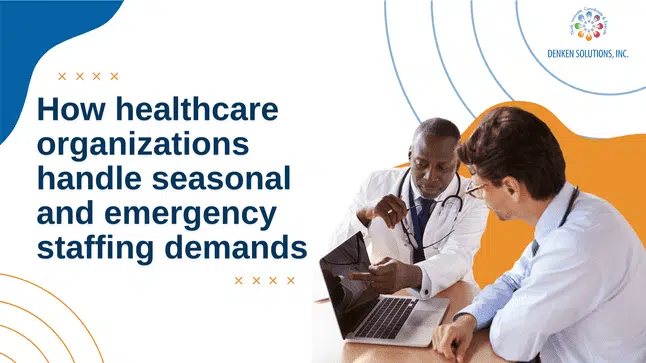
The healthcare industry will never slow down; however, staffing demands can fluctuate significantly at certain times of the year. From summer vacation schedules to flu season, healthcare facilities often find themselves balancing patient care with workforce shortages. Effectively managing seasonal needs is not only about filling shifts but also about maintaining quality care and preventing burnout among existing staff.
In this blog, we have provided detailed guidance on how healthcare organizations will handle seasonal and emergency staffing demands.
Challenges posed by seasonal staffing demands
Fluctuations in patient numbers can pose various challenges for healthcare staffing during demand spikes. Staffing shortages during peak season can lead to burnout and compromise the quality of care, straining the existing workforce. At the same time, overstaffing can significantly strain budgets. Recruiting and training staff for short-term hiring can result in inefficiencies and disrupt the seamless flow of operations. In this situation, a flexible staffing approach will be important. The challenges posed by seasonal staffing demands include the following:
1. Patient care:
A responsive staffing team will ensure patient care remains uncompromised during fluctuations in demand. Appropriate staffing will mean reduced waiting times, a quick and efficient emergency response, and enhanced attention to the patient’s needs. Improved care quality will enhance patient satisfaction and the reputation.
2. Employee morale:
Patient loads are constantly changing, which significantly strains healthcare professionals’ morale. This will result in fatigue and burnout. Hiring seasonal healthcare workers will help in navigating all of these effects. It is well known that nurses who are not overburdened are much more likely to maintain higher levels of job satisfaction and engagement. This will positively impact patient interactions and the final outcome.
3. Overall efficiency:
Efficient staffing will help eliminate both underutilized staff and overworked teams. This will translate into smoother workflows, fewer hurdles, and more efficient resource allocation. By fostering a balanced work environment, healthcare facilities can ensure that every staff member’s skills are maximized when they matter most.
4. Increases costs:
Permanent staffing decisions made because of temporary fluctuation can result in unnecessary overhead during the off-peak periods. Flexible staffing solutions will allow organizations to access a pool of skilled healthcare professionals when needed, without adding to the long-term costs of permanent hires.
Trends shaping healthcare workforce management in 2026
Managing the healthcare workforce is changing as organizations respond to staffing shortages and rising patient demand. In 2026, healthcare providers are adopting flexible staffing models and solutions to improve efficiency and maintain the quality of patient care.
1. Predictive analysis to plan smartly:
Reliable historical data helps in creating lasting improvements. Metrics such as staff utilization, real-time demand signals, seasonal fluctuations, and patient inflow help organizations analyze staffing needs before issues arise.
Predictive analytics helps eliminate guesswork in scheduling and capacity planning. This helps the team to align their coverage with patient demand more accurately.
2. Flexible staffing models:
Healthcare organizations are increasingly using flexible staffing solutions to hire contingent talent. Contingent staffing will help introduce flexibility, scalability, and efficiency within your organization. These approaches will enable organizations to respond efficiently to fluctuating patient volumes, help fill coverage gaps, and reduce the administrative work associated with frequent schedule changes.
3. Engagement with workforce:
Transparent scheduling systems will allow you to simplify shift swaps, time-off requests, and also schedule access. This helps build trust and gives staff much more control over their work. When staff feel supported, stress decreases, and retention improves. This will directly benefit the quality of care they provide.
Role of staffing agencies in emergency and seasonal hiring
Staffing agencies play an important role in helping healthcare organizations respond quickly to seasonal spikes and emergency staffing needs. During periods of increased patient volume or unexpected staff shortages, agencies will provide quick access to qualified, pre-screened healthcare professionals. This will ensure continuity of care without any delays.
1. Quick access to qualified candidates:
Staffing agencies will maintain a large pool of healthcare professionals ready to join. This will allow organizations to fill important roles quickly and efficiently.
2. Faster response during emergencies:
In certain situations, such as disease outbreaks, sudden staff shortages, and natural disasters, direct workforce support can be provided to ensure uninterrupted healthcare services.
3. Reduced administrative burden:
Staffing agencies will handle the sourcing, credential verification, screening, and onboarding. This will allow healthcare organizations to focus on operations and patient care.
4. Flexible staffing solutions:
Healthcare providers can hire contract or temporary professionals based on their needs. This helps them scale their workforce during peak periods.
5. Ensures compliance and credentialing:
Staffing agencies will ensure that healthcare professionals meet licensing, certification, and compliance requirements, thereby reducing legal and operational risks.
How Denken Solutions helps healthcare organizations overcome workforce shortages
Healthcare workforce shortages can affect operations, increase staff burnout, and compromise patient care. Denken Solutions will provide reliable, scalable staffing support to help healthcare organizations quickly fill critical roles and maintain operational efficiency.
1. Access to a large pool of qualified talent
Denken Solutions will connect healthcare organizations with pre-screened and experienced professionals. This includes nurses, allied health staff, and technical specialists. This will ensure the right talent is available when required.
2. Quick hiring and deployment
Our streamlined recruitment process allows healthcare providers to fill urgent positions quickly and efficiently. This will help reduce downtime and ensure constant patient care.
3. Flexible staffing solutions
Denken Solutions will offer contract, temporary, and project-based staffing options, enabling healthcare organizations to scale their workforce in response to seasonal demand and operational requirements.
4. Verification of credentials and compliance
To ensure healthcare workers meet legal and industry standards, we manage employment documentation, compliance requirements, and credential checks.
5. Decreased administrative burden
Denken Solutions frees up healthcare organizations to concentrate on providing high-quality patient care by handling sourcing, screening, onboarding, and workforce coordination.
With Denken Solutions as your staffing partner, a healthcare organization can easily overcome workforce shortages. This improves operational efficiency and ensures consistent and high-quality patient care.
Conclusion:
It doesn’t have to be difficult to manage seasonal staffing. Even during your busiest months, a reliable recruitment partner can help you anticipate demand, find skilled specialists, and ensure your facility remains fully staffed. Our specialty at Denken Solutions is matching elite people in advanced practice, allied health, nursing, and physician positions with healthcare institutions. Our team guarantees smooth staffing solutions, whether you require temporary covering or long-term assignments, allowing you to concentrate on patient care, the most important thing.
FAQs About Seasonal and Emergency Healthcare Staffing
1. What are the causes of seasonal staffing shortages in healthcare?
Seasonal staffing shortages are usually caused by increased patient volumes during the flu season, holidays, and public health emergencies. Burnouts, staff vacations, and unexpected leaves will also result in workforce gaps.
2. How do healthcare organizations prepare for seasonal staffing demands?
Healthcare organizations tend to use workforce planning, flexible staffing, and predictive analytics models, such as contract and temporary hiring, to prepare for seasonal demand and ensure adequate coverage.
3. What is emergency healthcare staffing?
Emergency healthcare staffing typically involves quickly hiring qualified healthcare professionals to address sudden workforce shortages caused by emergencies such as disease outbreaks, natural disasters, or unexpected increases in patient admissions.
4. How do staffing agencies assist healthcare organizations during staffing shortages?
Staffing agencies will provide rapid access to pre-screened healthcare professionals, handle background verification, and handle onboarding. This will help all healthcare organizations fill important roles quickly and help in uninterrupted patient care.
5. What types of healthcare professionals are usually hired during the seasonal demand?
Some of the most common roles hired during seasonal demand include nurses, allied health professionals, imaging technicians, lab technicians, and respiratory therapists. They will assist with patient care during peak seasons.