The telecom industry is growing at a fast pace. This is because companies are expanding networking infrastructure, modernizing legacy systems, and adopting new technologies to meet the expanding connectivity demands. However, finding an experienced network engineer with the correct technical expertise can get challenging. Specialized skill requirements, changing technologies, and workforce gaps can affect important network projects. This can result in telecom network engineering talent gap.
Contingent staffing offers telecom companies a flexible way to address these challenges by providing access to skilled network engineering professionals based on project and technical needs. It will allow your company to expand its talent pool, hire specialized expertise when required, and scale technical teams as per any change in demand. In this blog, we will analyze the network engineering talent gap in telecom and how contingent staffing can help companies build a flexible and responsive technical workforce.
Why is there a network engineering talent gap in telecom?
The telecom industry is changing by the day. This is because companies are modernizing network infrastructure, expanding connectivity, and adopting technologies like 5G, cloud networking, automation, and software-defined networks. These changes are increasing the requirement for network engineers with specialized technical expertise, while the availability of professionals with the right combination of skills and experience can be limited. Various factors are contributing to the network engineering talent gaps:
1.Rapidly evolving network technologies
Telecom networks are continuing to become way more complicated. Engineers have to keep pace with new technologies, architectures, tools, and network environments, thus making specialized and current expertise increasingly important.
2. Growing demand for specialized skills
Modern telecom projects tend to require expertise in areas like wireless networking, network security, cloud infrastructure, automation, switching, routing, and network optimization. Finding the right professional with the exact skills required for a certain project can get challenging.
3. High demand for experienced technical talent
Telecom companies are not the only ones looking for network engineering talent. Cloud providers, technology-based companies, data centers, and other industries also tend to compete for professionals with infrastructure and networking expertise.
4. Experience requirements for complicated projects
Multiple telecom initiatives will need talent who can work on complicated network environments with minimal ramp-up time. The combination of technical knowledge, hands-on experience, and industry familiarity can significantly reduce the available pool of talent.
Why are network engineers important for smooth telecom operations?
Network engineers tend to play an important role in keeping the telecom networks reliable, scalable, and capable of handling growing connectivity demands. They are also usually responsible for designing, implementing, monitoring, troubleshooting, and optimizing the infrastructure that supports voice, data, internet, and other communication-related services.
As telecom networks are becoming increasingly complicated, their expertise is becoming important. Network engineers will help organizations to maintain existing infrastructure while also supporting the transition to newer technologies like 5G, network automation, cloud networking, and software-defined infrastructure. Overcome 5G engineer hiring challenges with access to specialized telecom professionals for next-generation network projects.
1. Maintaining network reliability
Telecom services usually depend on networks operating constantly and efficiently. Network engineers will monitor infrastructure, identify any possible issues, troubleshoot failures, and implement solutions to reduce downtime and service disruptions.
2. Helps in expanding your network
As customer demand and data usage keep increasing, telecom providers have to expand the capacity of the network and coverage. Network engineers design and deploy infrastructure that can support this growth while also maintaining reliability and performance.
3. Handle complicated network infrastructure
Modern telecom environments tend to involve multiple technologies and layers. This includes fiber networks, IP infrastructure, routing, wireless systems, switching, 4G, 5G, and network security. Network engineers also help integrate and handle these components so that they can work together effectively.
4. Optimizes network performance
Network engineers analyze performance data to identify bottlenecks, congestion, and other issues that can affect connectivity. By optimizing configurating capacity and configuration, they will help in ensuring networks can handle increasing traffic and changing usage patterns.
How can contingent staffing help close the network engineering talent gap?
As telecom networks are becoming more complicated, companies will require engineers with specialized expertise across areas like 5G, fiber networks, automation, and network security. However, these skills might not always be available through traditional hiring. Contingent staffing will give your telecom company a flexible way to access experienced network engineering professionals depending on certain projects and operational requirements. This makes the process of 5G engineer hiring easy and flexible.
1. Access specialized skills in network engineering
Contingent staffing will allow telecom companies to bring in talent with expertise in certain technologies, platforms, and network environments. Whether a project needs knowledge of 5G infrastructure, network security, fiber deployment, cloud networking, or network automation. Organizations can easily add certain specialized skills without waiting to build that expertise internally.
2. Scale teams depending on the demands of the projects
Infrastructure upgrades, migrations, network rollouts, and expanding projects can create a temporary increase in workload. Contingent staffing will allow companies to increase engineering capacity during these periods and adjust workforce levels as project requirements change.
3. Reduces the lengthy hiring cycles
Recruiting experienced network engineers for permanent positions can actually take some time. This is especially when highly specialized skills are needed. Access to pre-screened contingent talent will help companies fill immediate skill gaps and keep important network initiatives moving while permanent hiring also continues.
4. Expands the available pool of talent
Limiting recruitment to a narrow geographical area will make specialized network engineering talent increasingly difficult to find. A contingent staffing strategy can broaden access to qualified talent across multiple markets, helping organizations identify expertise which might not be readily available locally.
When should telecom companies consider contingent network engineers?
Telecom companies might not always have to consider expanding their permanent workforce to meet every technical requirement. Certain projects, specialized network requirements, or temporary increases in work can create a short-term talent gap. In this situation, contingent workers can provide additional support. This can help keep operations and projects moving. Scale your telecom workforce with specialized recruiting support built around industry-specific talent needs.
1. During huge network rollouts
Large-scale network deployments like 5G expansion or fiber network rollouts will need additional engineering resources for certain periods. Contingent engineers will support this network design, deployment, testing, configuration, and optimization throughout multiple stages of the rollout.
2. When specialized skills are needed
Certain projects might need expertise that isn’t always available within the internal engineering team. Telecom companies can use contingent staffing to access professionals with experience in areas like network automation, cloud networking, network security, SDN, fiber infrastructure, or specific vendor technologies.
3. During network migrations and upgrades
Migrating network systems, modernizing legacy infrastructure, or introducing new technologies can easily increase engineering requirements. Contingent network engineers can provide additional support during these transitions without companies having to create permanent positions for temporary requirements.
4. When project workload tends to increase
Telecom engineering requirements can fluctuate depending on the pipelines of projects and deployment schedules. When various projects are running simultaneously, contingent talent can help increase workforce capacity and also reduce pressure on existing engineering teams.
How Denken Solutions helps telecom companies address network engineering talent gaps
Finding network engineers with the right technical expertise can get challenging. This is because telecom companies tend to expand networks, modernize infrastructure, and adopt technologies like 5G, fiber, cloud networking, automation, and network security. Denken Solutions will help telecom companies address these workforce gaps via contingent staffing solutions made for certain technical, operational, and project-based requirements.
1. Access to specialized network engineering talent
Denken Solutions will help telecom companies to find talent with experience across multiple network technologies and environments. Depending on the requirements of the project, organizations can access talent for roles like network engineers, NOC engineers, network security engineers, fiber engineers, cloud network engineers, and network automation specialists.
2. Staffing depending on the requirements of the project
Not every network engineering requirement will need a permanent employee. Denken Solutions will help companies add contingent talent for network deployments, migrations, infrastructure upgrades, optimization projects, and other defined technical initiatives.
3. Quick access to qualified talent
Long hiring processes can significantly slow down important telecom projects. Denken Solutions will support the candidate sourcing process and screening to help your company find professionals whose skills and experience will align with the technical requirements.
Conclusion
As telecom networks continue to evolve with technologies such as 5G, fiber infrastructure, cloud networking, automation, and network security, finding professionals with the right expertise can become challenging. Contingent staffing gives telecom companies a flexible way to access specialized network engineering talent, scale teams based on project requirements, and support network rollouts, upgrades, and other critical initiatives without relying solely on permanent hiring. As one of the telecom temp agencies trusted for technical depth, Denken Solutions pairs fast placement with rigorous screening for every network engineering role.With the right contingent staffing strategy, telecom companies can address skill gaps while building a more flexible workforce that can adapt to changing network and operational requirements.
Access specialized telecom recruiting support and find the talent you need. Become our customer.
FAQs:
1. Why is there a network engineering talent gap in telecom?
The telecom industry is evolving rapidly with technologies such as 5G, cloud networking, automation, and software-defined networks. This growth is increasing the demand for network engineers with specialized skills, while finding professionals with the right technical expertise and experience has become more challenging. Pasted markdown
2. What skills do modern telecom network engineers need?
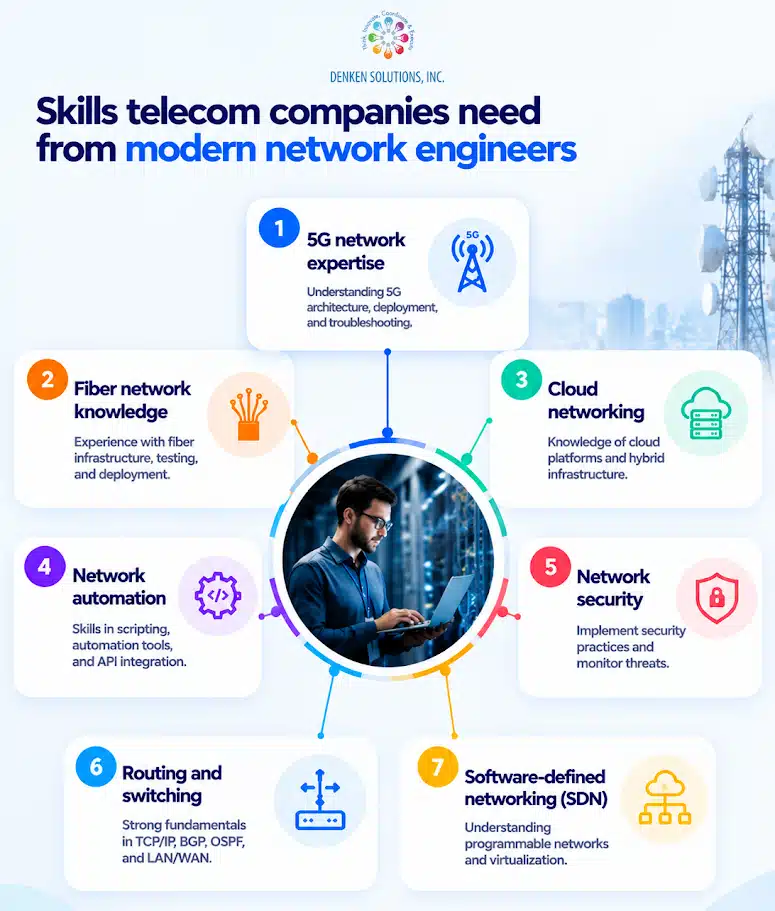
Modern network engineers need expertise across areas such as 5G infrastructure, fiber networks, cloud networking, network automation, network security, routing and switching, and software-defined networking (SDN) to support complex telecom environments.
3. When should telecom companies consider hiring contingent network engineers?
Telecom companies can consider contingent network engineers during major network rollouts, infrastructure upgrades, migrations, specialized technical projects, or periods when project workloads increase and additional engineering support is required.
4. Why should telecom companies partner with Denken Solutions for network engineering staffing?
Denken Solutions helps telecom companies build a flexible technical workforce by supporting candidate sourcing and screening to identify professionals whose skills align with specific technical requirements. This enables organizations to access qualified network engineering talent faster and support critical initiatives such as network deployments, migrations, infrastructure upgrades, and optimization projects.