
In the current job market, attracting and retaining top talent is becoming an important challenge for companies across the globe. To overcome this challenge, companies have started turning their attention to developing and promoting their Employee Value Proposition (EVP). You must be wondering what exactly an EVP is and why it has emerged as an important concept in the realm of human resource management. In this blog, we have provided you with an in-depth understanding of EVP, its importance, and a detailed roadmap on how to create an effective EVP strategy.
What is employee value proposition (EVP)?
An Employee Value Proposition (EVP) is the combination of rewards, benefits, workplace-related experiences, and opportunities that a business tends to offer employees in exchange for their skills and contributions. It also defines why employees will choose to join a certain company, stay with it, and grow in their careers.
EVP tends to go way beyond salary and benefits. It also includes factors like career development, culture of the company, flexibility, recognition, leadership support, and work-life balance. A strong, authentic EVP will help companies attract the right talent, improve employee engagement, and build long-term employee loyalty.
Why is employee value proposition important?
A strong employee value proposition will help organizations to attract, engage, and retain the correct talent in a competitive job market. It will give employees a clear understanding of what they can really expect from the business beyond just compensation. It also includes career growth, workplace culture, flexibility, recognition, and development-related opportunities.
A well-defined EVP will also help companies to differentiate themselves from other employers and strengthen their brand. When companies deliver on their EVP promises, employees are way more likely to feel valued, stay engaged, and build a long-term connection with the company. This will result in improved retention, better hiring outcomes, and a strong overall employee experience.
What are the key components of an EVP?
A strong Employee Value Proposition (EVP) is built around various factors that will influence an employee’s experience with an organization. It will represent the complete value employees will receive in return for their skills, contributions, and commitment. While compensation is a primary part of an EVP, employees presently consider various other factors. It includes growth opportunities, workplace culture, flexibility, and overall support.
1. Rewards and compensation:
Compensation is one of the most visible components of an EVP. Employees would prefer to feel that their skills, experience, and contributions are rewarded fairly. This also includes competitive salaries, performance-based bonuses, recognition programs, incentives, and other rewards that acknowledge the achievements of employees. A well-structured compensation strategy will help organizations attract skilled talent and improve employee satisfaction.
2. Employee support and benefits:
Benefits play a crucial role in creating a positive employee experience. Beyond any financial rewards, employees will value support systems that improve their overall well-being and security. Health insurance, retirement plans, paid time off, wellness programs, parental benefits, and other employee-focused initiatives can make an organization increasingly attractive to current and potential employees.
3. Development opportunities and career growth
Employees want to work for businesses where they can grow, learn, and advance their careers. An effective EVP will highlight opportunities for professional development via training programs, mentorship, skill-building initiatives, certifications, and clear career progression paths. Providing growth opportunities will help companies improve engagement and retain employees for the long term.
4. Employee experience and workplace culture
Company culture has a huge impact on how employees will feel about their workplace. A strong EVP will reflect the values of your company, leadership approach, communication style, collaboration practices, and commitment to creating an inclusive environment. Employees are most likely to continue working when they feel respected, supported, and connected to the company’s mission.
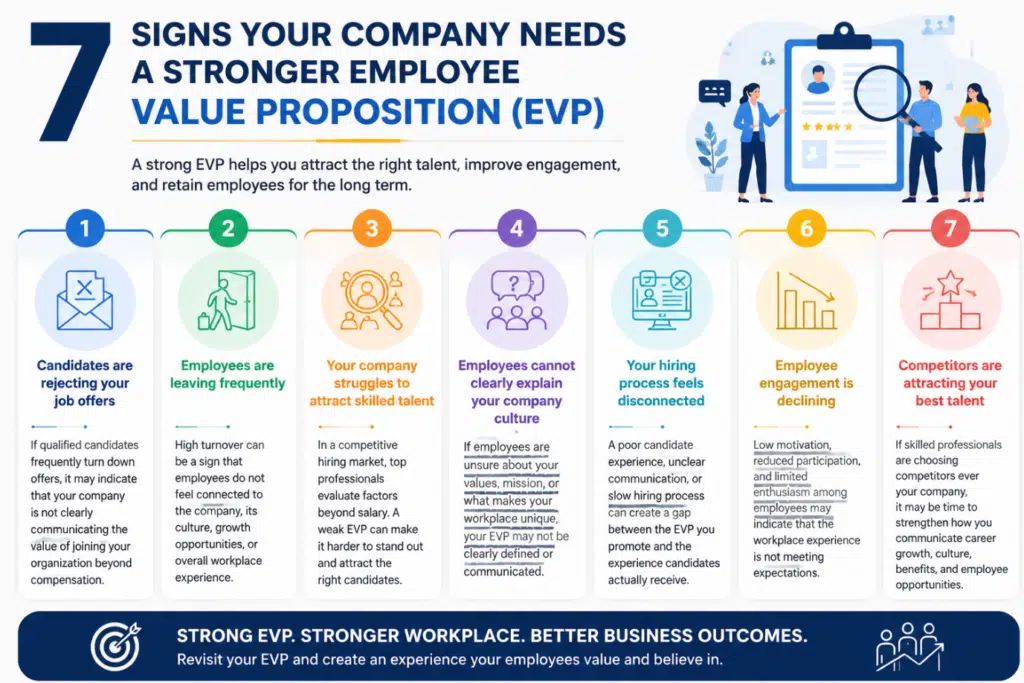
How to build a strong employee value proposition
A strong Employee Value Proposition (EVP) does not happen by just enlisting employee benefits. It will also require understanding what the employees value, identifying what would make your company unique, and also creating an experience that would align your employees’ expectations with business goals. A well-defined EVP helps companies attract the right talent, improve engagement, and strengthen employee retention.
1. Understand the expectations of your employees
The initial steps of building an effective EVP are to understand what employees tend to value the most. Companies can gather insights and data through:
- Employee surveys
- Feedback sessions
- Engagement data
- Exit interviews
- Workplace reviews
Understanding employee needs will help companies create an EVP that will reflect the actual employee experience.
2. Identify what would make your company unique
Every business has a set of unique strengths which would influence the experience of an employee. You should consider what would set your company apart. This can include:
- Company culture
- Leadership approach
- Career growth opportunities
- Work environment
- Employee benefits
- Learning opportunities
These factors tend to become the foundation of your EVP.
3. Define the EVP pillars
A strong EVP should primarily focus on important areas that would matter most to employees. Common EVP pillars will include:
- Career growth: Opportunities for development, learning, and advancement
- Work culture: A supportive and inclusive workplace environment
- Benefits and compensation: Competitive rewards and employee support
- Work-life balance: Initiatives and flexibility that support employee well-being
Values and purposes: Meaningful work and alignment with company goals.
4. Align EVP with your business goals
Your EVP should represent both the objectives of the company and employee expectations. A well-aligned EVP will help organizations by:
- Attracting candidates who will fit the company culture
- Building stronger employee connections
- Improve workforce engagement
Supporting long-term business growth
5. Communicate your EVP consistently
Creating an EVP is just effective when employees and candidates understand it. Companies should communicate their EVP through:
- Career pages
- Job descriptions
- Social media content
- Recruitment campaigns
- Internal employee communication
Consistency will help in building trust and creating a clear understanding of what employees can expect.
How Denken Solutions helps businesses strengthen their employee value proposition
A strong employee value proposition will help your company attract, engage, and retain the right talent by communicating clearly what employees can expect from the business. For businesses that are competing for skilled talent, especially in technology-driven industries, creating a positive employee experience is important. Denken Solutions will help companies strengthen their workforce strategy by connecting them with qualified IT talent who will align with their business requirements, culture, and long-term goals.
1. Connecting companies with the right talent
Denken Solutions will help businesses access qualified talent who match their role requirements and workforce objectives. Finding candidates with the right skills and experience will help companies build teams where employees can contribute efficiently and grow in the company.
2. Supports a better hiring experience
A strong EVP starts from the very first interaction with the candidate. Denken Solutions will help in streamlining the hiring process by supporting candidate sourcing, coordination, and screening. This creates a smooth experience for professionals and employers.
3. Helping companies build strong teams
The right talent will contribute in making a strong workplace culture. By helping businesses find talent who align with their technical requirements and organizational goals, Denken Solutions supports companies in building teams that drive collaboration and long-term success.
Conclusion
An Employee Value Proposition (EVP) is the total experience that a company offers its workers in exchange for their abilities, dedication, and contributions. It is more than just a list of benefits or workplace perks. By fostering an environment where workers feel appreciated and supported, a strong EVP aids businesses in attracting the best talent, enhancing employee engagement, and strengthening retention. Organizations can strengthen their employer brand and workforce strategy by concentrating on elements like career development, business culture, pay, flexibility, and purpose. Companies must constantly improve their EVP to produce meaningful experiences that promote employee success and long-term corporate growth as employee expectations continue to change.
FAQs:
1.What is an Employee Value Proposition (EVP)?
An Employee Value Proposition (EVP) is the combination of rewards, benefits, workplace experiences, and growth opportunities that a company offers employees in exchange for their skills and contributions. It defines why employees choose to join, stay, and grow with an organization.
2.Why is Employee Value Proposition important for companies?
A strong EVP helps companies attract the right talent, improve employee engagement, strengthen retention, and differentiate themselves from competitors in a competitive hiring market.
3.What are the key components of an effective EVP?
The key components of an EVP include compensation and rewards, employee benefits, career development opportunities, workplace culture, flexibility, recognition, leadership support, and alignment with company values.
4.How does Denken Solutions help companies attract IT talent?
Denken Solutions helps companies connect with qualified IT professionals who match their technical requirements, business needs, and workforce goals. By understanding the role requirements and company expectations, Denken Solutions helps businesses find talent that can contribute effectively.
5.How does Denken Solutions improve the candidate hiring experience?
Denken Solutions supports a smoother hiring journey by helping with candidate sourcing, screening, coordination, and communication. This helps create a better experience for candidates while allowing companies to identify the right talent efficiently.