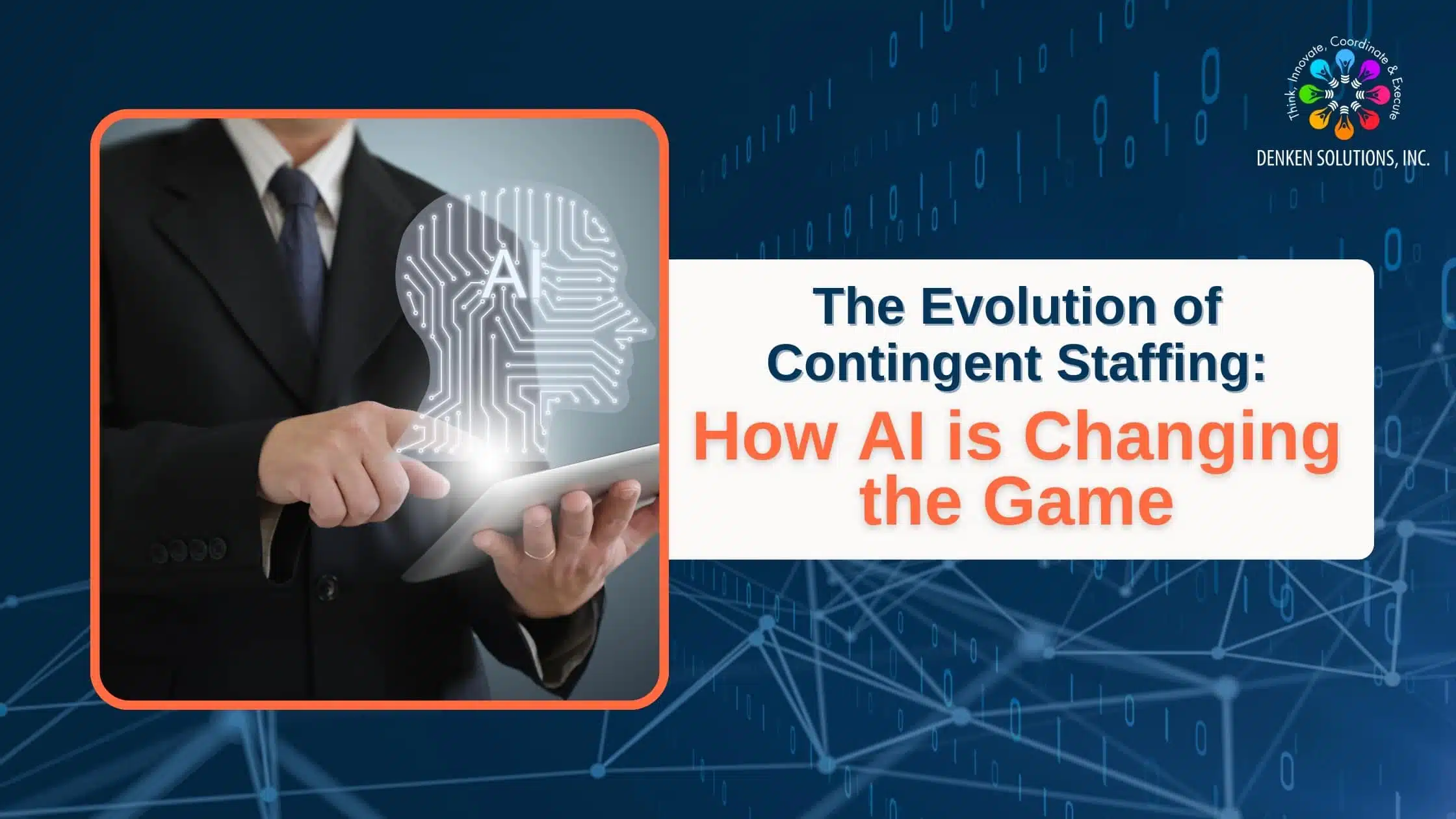
Introduction to AI powered contingent With constantly evolving trends, the world of employment has witnessed an increase in contingent staffing. As a result of contingent staffing, the way companies handle their workforce is changing. Businesses use diverse staffing options to remain flexible and thrive in today’s rapidly evolving market.Artificial intelligence is changing how companies approach contingent staffing by improving candidate matching, automating repetitive recruitment tasks, and supporting faster workforce decisions. From AI-powered screening to automated communication, these technologies are helping staffing teams work more efficiently while maintaining the human element of recruitment.
As businesses continue to adapt to dynamic market demands, AI in contingent staffing is playing a crucial role in enhancing workforce flexibility, reducing costs, and improving hiring accuracy.
How AI Is Transforming Contingent Staffing
AI not only benefits a business but also enhances the experience of contingent workers.
- A major instance to prove the above is the personalized AI tools that match workers with projects that align with their skills and career aspirations.
- Automated workflows facilitate smoother onboarding, faster payments, and streamlined communication, which are critical factors in keeping contingent workers engaged and satisfied.
- Using AI can also encompass learning and development.
- AI tools can recommend upskilling opportunities by analyzing individual performance data, thus helping workers expand their expertise and remain competitive in the gig economy. In turn, this led to businesses having access to a pool of highly skilled talent.
How AI Improves the Contingent Staffing Process
AI-driven efficiency can help with compliance, onboarding, payroll, and performance tracking, all of which are challenges in managing a temporary workforce. AI driven hiring is changing contingent worker programs in the following ways:
-
Automation in workforce management
Timesheet approvals and payroll processing are examples of repetitive operations that frequently deplete resources. These can be handled by AI-powered solutions with little assistance from humans, freeing you up to concentrate on strategic objectives. AI payroll processing streamlines tax filings across jurisdictions and helps with compliance.
-
Elevate the candidate matching process
For most businesses, it’s crucial to find contingent talent as soon as possible. Artificial intelligence (AI) can assist in the analysis of contingent labor trends and large datasets by matching applicants based on project requirements and particular talents rather than general job titles. This enables businesses to assemble highly specialized teams, guaranteeing that the appropriate personnel is available to fulfill project requirements.
-
How AI Chatbots Improve Candidate Communication
Chatbots powered by AI are revolutionizing how recruiters interact with possible applicants. AI chatbots contact applicants on their own using a variety of platforms, including job boards, LinkedIn, SMS, and email. They personalize and enliven interactions by using natural language processing (NLP) to start discussions. This helps the recruiters concentrate on making strategic hiring decisions as manual cold outreach is eliminated.
-
How AI Improves the Candidate Experience
AI chatbots improve contact with contingent workers by instantly responding to job inquiries. AI-powered onboarding guarantees that temporary staff members receive prompt training and have access to the tools they need. Feedback systems driven by AI evaluate employee performance and satisfaction, improving the experience for both employers and employees.
Disadvantages of using AI for contingent staffing
Adopting AI in contingent staffing comes with various disadvantages. However, by implementing the right approach, these can be overcome effortlessly. This includes:
-
Algorithmic bias:
- AI systems may inadvertently perpetuate preexisting prejudices in labor management and recruiting.
- Solution: To ensure fair and equitable employment procedures, assess AI algorithms regularly to find and remove biases. To improve AI accuracy, use representative and varied training data.
-
Data security:
- AI depends on a lot of private employee data, which needs to be shielded against hacking and abuse.
- Solution: To protect information, put strong privacy procedures in place, encrypt data, and adhere to international data protection laws like the CCPA and GDPR.
-
Resistance from the employees:
- Employees may worry that AI may disrupt current workflows or replace them.
- Solution: Offer thorough training courses that highlight how AI may enhance human abilities rather than take the place of workers. Emphasize how AI can increase productivity and simplify tedious processes.
-
Moral Application
- Stakeholders may become concerned when AI’s decision-making procedures are opaque.
- Solution: Explain openly how AI is incorporated into workforce choices so that stakeholders and staff are aware of its function. Provide rules for the moral application of AI while preserving human oversight in crucial decision-making procedures.
The future of AI in contingent staffing
We must take a balanced approach to AI in the staffing industry. As AI adoption grows, contingent staffing teams will increasingly use technology to improve candidate matching, automate administrative tasks, and make faster workforce decisions. This affects the company’s management of these employees and has tax ramifications. At its core, staffing is about people, and AI cannot replace the connections that exist between them. Many candidates like to communicate with their recruiter once a week to discuss how their job search is going and to obtain updates on any additions or changes.
Despite its increasing influence, AI will not replace all jobs. Human comprehension, warmth, empathy, years of experience, and soft talents like intuition, leadership, communication, and time management are all absent from AI. Even if AI is a very useful technology, human interaction is still crucial. Both employers and employees, whether temporary or permanent, can benefit from AI.
Conclusion
AI is changing contingent staffing by helping businesses identify talent faster, automate repetitive recruitment activities, improve candidate matching, and make workforce decisions using data. However, technology works best when combined with human expertise and meaningful recruiter-candidate relationships. As AI adoption continues to grow, staffing teams can use these technologies to improve efficiency while keeping people at the center of the hiring process. The future of contingent staffing will depend on finding the right balance between automation, data-driven insights, and human judgment.Businesses that need flexible support for contract and project-based hiring can explore our contingent staffing services for additional information.