As the workforce landscape is constantly evolving, contingent staffing is becoming a strategic approach for organizations that are looking for flexibility, cost efficiency, and specialized skills. Contingent employees tend to play a primary role in assisting businesses that adapt to changing demands. However, as organizations expand access to their systems, resources, and data beyond traditional employees, new challenges around data security have emerged.
As the contingent workforce keeps growing, businesses should strike a balance between data protection and workforce agility. Understanding the primary data security concerns which are associated with contingent staffing and implementing effective safeguards is important for protecting valuable data, maintaining trust, and also ensuring regulatory compliance in an increasingly digital business environment.
What is a contingent workforce?
A contingent workforce refers to a group of non-permanent workers who are hired by an organization on a flexible or temporary basis to meet certain business needs. This will include freelancers, consultants, independent contractors, part-time employees, and temporary staff. Unlike full-time employees, contingent workers will typically not have long-term contracts or the same benefits as permanent staff, but they will provide businesses with flexibility to scale the workforce based on project demands, seasonal workloads, or specialized expertise.
Contingent workforce jobs are becoming an essential part of modern business operations. They will allow organizations to access diverse skill sets, reduce operational costs, and respond quickly to market changes. However, the flexibility will make temporary workers valuable and introduce challenges, especially around security, compliance, and data privacy. Since these workers will often have access to sensitive systems and information, organizations should adopt structured management practices to mitigate risks.
To learn more about building a contingent workforce, check out our blog on tips to build a contingent workforce
Impact of contingent staff on data access
The increasing use of contingent staff has significantly transformed how organizations handle workforce access to business resources. While freelancers, contractors, and temporary workers will provide valuable expertise and flexibility, they will need access to systems of the company, applications, and sensitive data to perform their roles. This expanded access will create a new challenge for companies in handling data security, controlling permissions, and preventing unauthorized use of primary data.
1. Increases access to sensitive business data:
Contingent workers usually require access to confidential data like customer records, financial data, internal documents, operational systems, and intellectual property. While this access is important for completing assigned tasks, it will also increase the number of users who are interacting with sensitive data and create additional security risks if access is not controlled properly.
2. Challenges in handling user permissions:
Unlike permanent employees who usually have well-defined roles and long-term access requirements, contingent workers might have changing responsibilities and reduced engagement periods. Organizations should ensure that access permissions are properly assigned depending on job requirements and regularly updated to prevent excessive or unnecessary access.
3. Risk related to unauthorized data exposure:
Contingent staff can work remotely, use personal devices, or collaborate across various organizations. This increases the possibility of accidental information sharing or security breaches. Without proper security measures, sensitive company data can be exposed via unsecured networks, unauthorized applications, or improper data handling practices.
4. Importance of access and identity management:
Effective identity and access management (IAM) will help companies control who can access specific systems and data. Implementing measures like role-based access controls, multi-factor authentication, and regular access reviews ensures that contingent workers will receive just the permissions required for their responsibilities.
Key data security concerns in contingent staffing
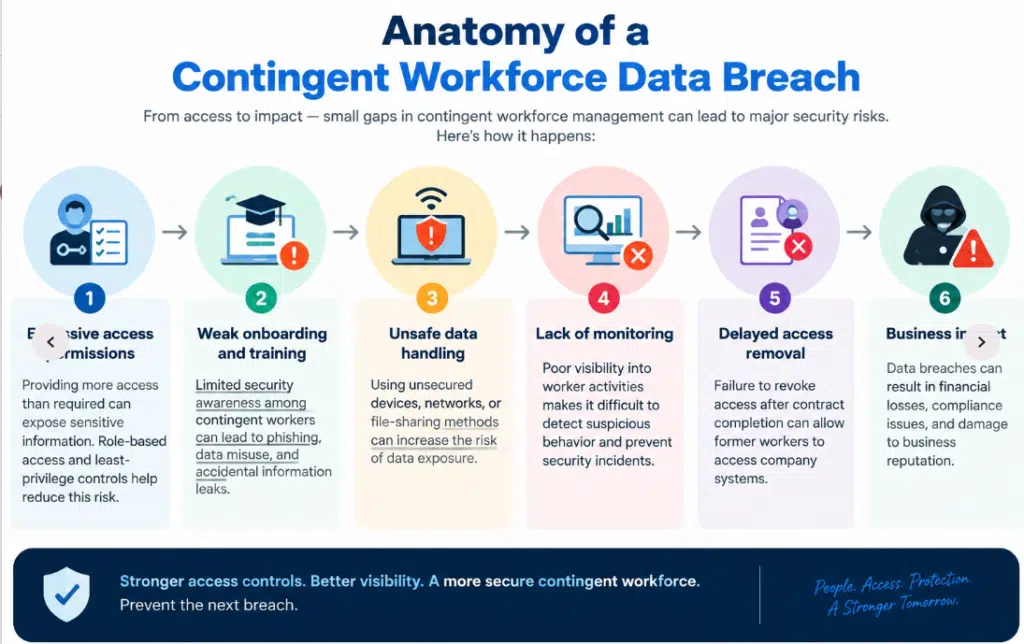
Contingent staffing will provide companies with the flexibility to access skilled talent quickly; however, it will also introduce new data security-related challenges. Since contingent workers usually need access to the company’s systems, applications, and sensitive data, organizations should carefully handle security risks throughout the worker lifecycle. Without any proper controls, issues like unauthorized access, data leakage, and compliance violations can have a major impact on business reputation and operations.
1. Unauthorized access to sensitive information:
Contingent workers might need access to confidential business data, financial records, customer data, and intellectual property to perform their responsibilities. Lack of proper access controls can result in excessive permissions; this allows individuals to modify or view data beyond their actual requirements. Implementing role-based access controls and least privilege principles will help in reducing the risk of unauthorized data exposure.
2. Security awareness and inadequate onboarding:
Various contingent workers will join companies for short-term assignments. This can result in a rushed onboarding process. Without any proper security training, workers might not completely understand information protection policies, compliance requirements, or safe handling practices. Organizations should provide security awareness training, confidentiality agreements, and clear guidelines before granting system access.
3.Weak onboarding and access removal processes:
When a contingent worker’s contract ends, delayed removal of system access can also create a massive security vulnerability. Former contractors might still have increased access to company applications, files, or communication platforms if accounts are not disabled promptly. Automated offboarding processes and regular access audits will help ensure that access is removed immediately when it is no longer needed.
4.Loss of confidential information and data leakage:
Contingent workers might handle sensitive business information via personal devices, cloud storage platforms, or external communication tools. Accidental sharing, unauthorized downloads, or poor data handling practices can result in information leaks. Organizations should use data protection measures like encryption, secure file-sharing platforms, and data loss prevention (DLP) solutions.
Common causes behind data security gaps in contingent staffing
As organizations increasingly depend on contingent workers, maintaining strong data security will become way more complicated. Freelancers, contractors, and temporary staff usually need access to business systems and sensitive data, but gaps in workforce management processes can create security vulnerabilities. These gaps often happen because of weak access controls, insufficient security practices, and a lack of coordination between IT, HR, and security teams.
1. No proper identity and access management:
One of the biggest causes of security gaps is ineffective management of permissions and user identities. Contingent workers might receive access that exceeds their job requirements, or their permissions might not get updated when their responsibilities change.
2. Inconsistent onboarding process:
Various companies provide quick onboarding for contingent workers to meet immediate business requirements. This can result in incomplete security processes. Workers might receive system access before completing security training, understanding data protection policies, or signing confidentiality agreements.
3.Delayed access removal and poor offboarding:
A common security weakness is failing to remove access immediately after the contract of a contingent worker ends. Former contractors will continue to access company systems, applications, or stored data if accounts are not properly disabled.
How Denken Solutions helps organizations secure their contingent workforce
As businesses increasingly rely on contingent workers to access specialized skills and maintain workforce flexibility, ensuring secure management of these workers has become a critical priority. Contractors, freelancers, and temporary employees often require access to company systems, applications, and sensitive information, creating potential security risks if access is not properly managed. Denken Solutions helps organizations address these challenges by enabling structured contingent workforce management practices that improve visibility, strengthen security controls, and support seamless workforce operations.
1.Strengthening workforce visibility and control:
A lack of visibility into contingent workers can create security gaps, especially when organizations struggle to track worker details, access requirements, and engagement status. Denken Solutions helps businesses establish better oversight of their contingent workforce by improving workforce data management and enabling organizations to maintain accurate records throughout the worker lifecycle.
2.Supporting secure onboarding and access management:
A secure onboarding process ensures that contingent workers receive appropriate access while understanding organizational security expectations. Denken Solutions enables organizations to streamline onboarding workflows, helping ensure that worker verification, documentation, compliance requirements, and access approvals are properly managed before individuals begin their assignments.
3.Enabling efficient access governance:
Managing access permissions for contingent workers is essential to protecting sensitive business information. Denken Solutions supports organizations in implementing structured processes that help align user access with job responsibilities, reducing the risk of excessive permissions and unauthorized data exposure.
Conclusion
As contingent staffing continues to grow, organizations must balance workforce flexibility with strong data security practices. By implementing proper access controls, security policies, employee training, and effective onboarding and offboarding processes, businesses can reduce risks and protect sensitive information. A secure contingent workforce strategy enables organizations to leverage external talent while maintaining data privacy, compliance, and trust.