The modern workforce has been evolving, and remote contingent workers are becoming a major part of how an organization will operate. Contingent talent will provide flexibility, specialized skills, and expertise, which also helps businesses meet the ever-changing requirements. However, effectively integrating these workers into remote teams will need way more than just assigning tasks. It will also require you to create an environment where they will feel connected, informed, and aligned with the goals of an organization.
As remote collaboration tends to grow, organizations should focus on effective communication, the right tools, and an inclusive culture. By treating contingent workers as valued contributors, businesses will be able to strengthen collaboration, improve productivity, and build a more agile workforce. In this blog, we have explored the practical strategies to build strong collaboration and maximize the potential of a distributed workforce.
Why is it important to include a contingent workforce in your team
Including contingent workers in your team will help your company access specialized skills, improve flexibility, and also build a more adaptable workforce. When contingent talent feels connected and valued, they can contribute more easily towards the goals of the team, collaboration, and overall success of the business. Creating an inclusive environment will ensure that contingent workers are not just completing tasks but also actively participating in the company’s success and growth.
1. Access to specialized skills
Contingent workers will bring unique experience and industry knowledge, which will help companies address certain business-related needs. Including them in the team activities will enable companies to use their skills, fill important talent gaps, and improve the quality of projects.
2. Improves flexibility of workforce
A well-integrated contingent workforce will allow companies to quickly adjust the capacity of the team depending on the changing priorities and demands of the business. Whether scaling up for new projects, handling peak workloads, or accessing specific expertise, contingent workers will provide the flexibility required to maintain productivity.
3. Enhances innovation and collaboration
When contingent workers are included in meetings, discussions, and knowledge-sharing activities, they will bring fresh perspectives and diverse opportunities to problem-solving. Their external experiences can encourage innovation, improve decision-making skills, and also help teams adopt new ways of working.
4. Strong team inclusion and engagement
Creating a sense of belonging for contingent workers will improve engagement and strengthen collaboration across your team. Providing them with clear communication, recognition, and equal opportunities to contribute helps build trust and ensures that they feel connected to the goals of your company.
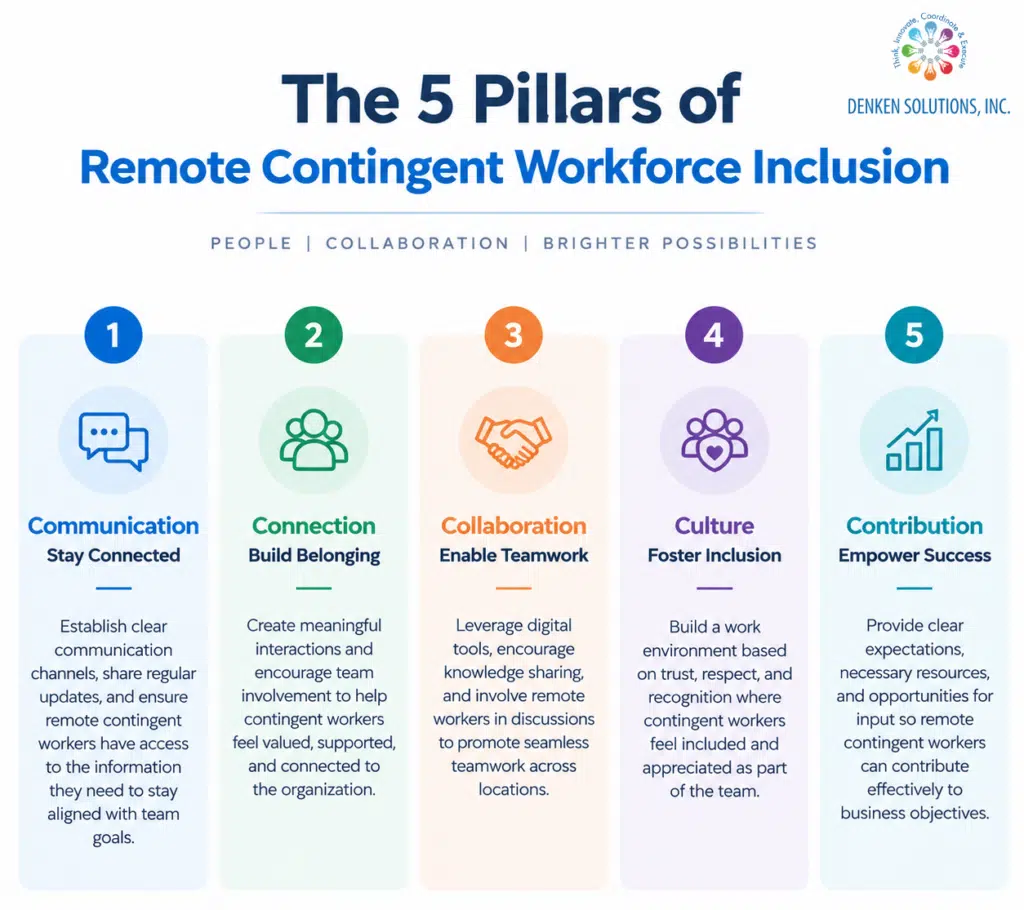
Strategies for including and collaborating with remote contingent workers
Successfully handling remote contingent workers will need way more than assigning tasks and tracking deadlines. Organizations will need to create an environment where contingent talent will feel connected, supported, and aligned with the objectives of your team. By implementing efficient collaboration strategies, businesses will improve communication, strengthen engagement, and also ensure remote contingent workers contribute efficiently to overall goals.
1. Create a smooth onboarding process
A structured onboarding process will help the remote contingent worker to understand the goals of the project, organization, workflows, and expectations from the very beginning. Enabling access to the required tools, resources, team introductions, and clear guidelines will allow them to adapt quickly and also become productive members of your team.
2. Establish processes for clear communication
Effective communication is important for successful remote collaboration. Companies should define the channels of communication, response expectations, and meeting practices to avoid any confusion and also ensure that everyone in the team stays informed. Checking in regularly and updating will help the remote contingent talent remain connected with the team.
3.Encourage a team-inclusive culture
Remote contingent workers should be treated like valued contributors instead of external resources. Including them in relevant meetings, team activities, and discussions will create a sense of belonging and also encourage strong collaboration.
4.Enable access to the tools and resources
Ensuring that the remote contingent talent has access to the required technology, project-related data, and collaboration platforms is important to maintain productivity. Organizations should enable easy access to documents, communication tools, and systems while also maintaining appropriate security measures.
5.Establish clear expectations and goals
Clearly define roles, deadlines, responsibilities, and success metrics to help your remote contingent worker understand what is really expected of them. Aligning their work with broader team objectives will improve accountability and ensure that their contribution supports the needs of the business.
6.Encourage collaboration and knowledge sharing
Remote contingent workers usually bring valuable talent and fresh opinions. Creating opportunities for knowledge exchange, brainstorming, and collaborative problem-solving will allow teams to benefit from their experience and encourage constant learning.
Close skill gaps faster with reliable contingent staffing solutions designed for evolving business demands.
How Denken Solutions builds stronger connections with remote contingent workers
At Denken Solutions, building a strong relationship with remote contingent workers will go way beyond handling deliverables and tasks. The focus is to create a collaborative environment where remote talent will feel connected, supported, and actually align with the goals of the company. By combining effective communication, inclusive practices, and technology-driven collaboration, Denken Solutions will allow contingent workers to contribute while also staying connected with teams.
1.Creating a collaborative and inclusive work environment
Denken Solutions recognizes the importance of making remote contingent workers feel like an integral part of the team. By encouraging open communication, involving them in relevant discussions, and promoting a culture of respect and collaboration, Denken Solutions helps build stronger professional relationships and a sense of belonging.
2. Enabling smooth communication and engagement
Clear and consistent communication plays a key role in successful remote collaboration. Denken Solutions focuses on maintaining transparent communication channels, ensuring remote contingent workers have access to important updates, project information, and team interactions needed to perform effectively.
3.Providing the right tools and resources
To support remote productivity, Denken Solutions ensures contingent workers have access to the necessary collaboration platforms, project resources, and information required for their roles. This enables smoother workflows, reduces communication gaps, and helps teams work together efficiently.
FAQs:
1.What are remote contingent workers?
Remote contingent workers are professionals such as freelancers, contractors, consultants, and temporary workers who provide services to an organization without being traditional full-time employees. They often work remotely and support businesses with specialized skills, project-based expertise, and flexible workforce needs.
2.Why is it important to include remote contingent workers in team activities?
Including remote contingent workers helps create stronger collaboration, improve engagement, and ensure they are aligned with organizational goals. When they feel valued and connected, they can contribute more effectively through their skills, experience, and fresh perspectives.
3.How can organizations improve collaboration with remote contingent workers?
Organizations can improve collaboration by establishing clear communication practices, using digital collaboration tools, setting expectations, sharing project updates, and creating opportunities for remote workers to participate in team discussions.
4.Why does Denken Solutions emphasize the inclusion of remote contingent workers?
Denken Solutions recognizes that successful collaboration with remote contingent workers requires more than task management. By promoting communication, engagement, and inclusion, Denken Solutions helps create a connected workforce where every contributor can align with team objectives and deliver meaningful results.
5.How does Denken Solutions enable effective collaboration with remote contingent workers?
Denken Solutions supports seamless collaboration by encouraging transparent communication, leveraging digital collaboration tools, and creating structured workflows that help remote contingent workers stay connected with teams and project goals.