A project can begin with a strong plan, skilled team members, and clear objectives; however, challenges can emerge as work processes. Changing requirements, evolving technologies, and increasing workload can significantly expose mid-project skill gaps that were not visible during the initial planning phase. When these gaps go unnoticed, they will result in delayed timelines, increased costs, reduced quality, and extra pressure on the existing teams.
Identifying skill gaps in the beginning will give your business an opportunity to take the right actions before they impact the success of the project. Mid-project skill gap contingent staffing helps businesses quickly access specialized professionals and keep projects on track without delivery delays. In this blog, we will explore how to recognize mid-project skill gaps and the best strategies to solve them efficiently.
What are mid-project skill gaps?
Mid-project skill gaps will happen when a project team lacks the required knowledge, expertise, or experience that is needed to complete tasks after the project has already started. These gaps usually appear when projects have actually started. These gaps usually appear when the requirements of the project change, new technologies are introduced, or workloads become more complicated than what was initially planned.
Unlike skill gaps identified during project planning, mid-project skill gaps are discovered while the work is already in progress. If not addressed early, this can create bottlenecks, delay timelines, increase costs, and put additional pressure on the existing team members.
Mid-project skill gaps usually fall into three categories:
1. Technical skill gaps
These occur when teams lack experience in specific technologies, tools, or technical areas needed for project completion. Examples include missing programming skills, limited knowledge of new platforms, or even a lack of specialized technical expertise.
2. Operational skill gaps
These happen when teams face challenges with workflows, processes, or even project execution. Examples also include gaps in project coordination, quality management, documentation, or resource planning.
3. Domain or industry knowledge gaps
These start showing when teams lack the specialized knowledge required to understand the requirements of the industry, customer expectations, regulations, or even compliance standards.
Identifying these gaps early helps businesses take corrective action through upskilling, adjusting resources, or accessing specialized talent through flexible staffing solutions. This helps keep projects on track.
Why do skill gaps appear during projects?
Skill gaps can appear at any given stage of a project. It can even happen when teams are carefully planned, and resources are allocated efficiently. As projects tend to evolve, new challenges, changing requirements, and unexpected complications can create the requirement for skills that were not considered during the initial phase of planning. Some common reasons why skill gaps will develop during projects include:
1. Changes in scope of project
As businesses require change, project requirements will usually expand beyond the initial plan. New features, additional deliverables, or updated goals might need expertise that the existing teams do not have.
2. Technology evolves during delivery
New tools, technologies, and platforms can emerge while a project is underway. However, teams might require additional technical knowledge to implement these solutions efficiently and maintain the quality of the project.
3. Planning resources initially was incomplete
Sometimes, teams are selected depending on the current project requirements without considering potential challenges or future phases. This can actually result in missing expertise when the project enters more complicated stages.
4. Limited resources and increased workload
When projects keep growing, team members might become responsible for additional tasks. Overloaded employees might struggle to handle new responsibilities, creating gaps in productivity, quality, or specialised knowledge.
5. Evolving business priorities
Business goals can shift because of changes in the market, customer demands, expansion plans, or new regulations. These changes might introduce new requirements that need different skills or expertise.
How to identify skill gaps early in a project
Identifying skill gaps before they impact the progress of the project will allow businesses to take proactive action and avoid any delays. Instead of waiting for performance issues or missed deadlines, teams should properly evaluate their capabilities, project requirements, and future resource needs. Given below are some of the effective ways to identify skill gaps early in a project and carry out project skill gap staffing:
1.Conduct an assessment to analyse skill gaps
A skills gap assessment will help in comparing the expertise the team currently has with the skills needed to complete the project successfully. By mapping existing capabilities against any project requirements, businesses can identify missing skills before they become challenges. The key areas to evaluate:
- Technical expertise
- Industry knowledge
- Project management skills
- Tools and technology experience
- Collaboration and communication abilities
2. Review project milestones regularly
Skill requirements will change as projects move from one phase to another. Regular milestone reviews will help your team identify upcoming challenges and determine whether additional expertise will be required. Staff augmentation delivery helps businesses strengthen project teams with skilled professionals, ensuring faster execution and successful outcomes.
3. Monitor project progress and team performance
Project performance data can reveal the early signs of gaps in skills. Delayed tasks, repeated errors, increasing amount of rework, or dependency on certain team members can indicate that additional assistance will be required. When unexpected resource gaps impact delivery, mid-project resource fill enables companies to bring in the right talent and maintain project momentum.
4. Encourage your team to give feedback
Employees who are working directly on projects usually understand the challenges even before they start showing to management. Creating an environment where team members can openly share concerns will help in identifying missing skills, resource limitations, and support requirements. In such cases, regular check-ins, feedback sessions, and team discussions can help in providing valuable insights.
5. Work with team leads and project managers
Project managers and technical leads tend to play a crucial role in understanding if the team has the right capabilities for every stage of the project. Their experience will help in identifying future skill requirements, resource constraints, and areas where extra support might be required.
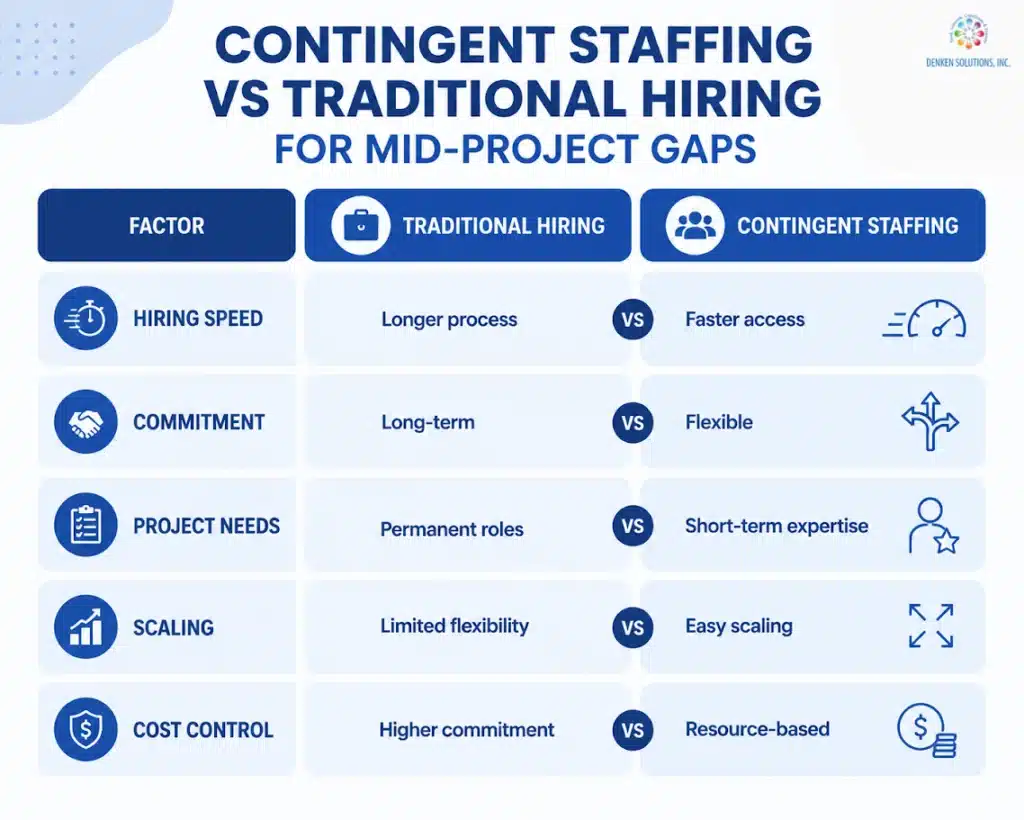
How does contingent staffing help in reducing mid-project skill gaps?
When skill gaps appear during the duration of a project, businesses would require a solution that will provide quick access to the right talent without disrupting any ongoing operations. Contingent staffing will help organizations bridge these gaps by connecting them with skilled talent who can support certain project requirements for a period of time.
Instead of delaying any projects while looking for permanent hires, businesses can easily bring in experienced contingent talent to address immediate shortages of skills and keep delivery timelines on track.
1. Provide quick access to specialized talent
Contingent staffing will enable businesses to quickly find talent with the exact skills required for a project. Whether a team requires expertise in technology, engineering, healthcare, finance, or other specialized areas, contingent workers can easily fill crucial gaps without lengthy hiring processes.
2. Support the changing requirements of the project
Projects usually evolve. This means there would be a requirement for new skills that are not a part of the actual plan. Contingent staffing will provide the flexibility to add specialists when any new challenge arises and helps in scaling resources based on the needs of the project.
3. Reduces delays in projects
Skill gaps can significantly slow down progress when existing employees tend to struggle with tasks outside of their expertise. Bringing in experienced talent will help your team overcome bottlenecks, complete any important tasks quickly, and also maintain project timelines.
4. Enables access to experienced talent
Contingent staffing partners will usually maintain access to a broad talent network. This makes it easy for businesses to connect with talent who already have relevant industry experience and project knowledge. This also reduces any time spent searching, screening, and training new resources.
How does Denken Solutions help in hiring contingent staff
Finding the right talent quickly can be super challenging. This is especially true when businesses face urgent project requirements, a shortage of skills, or changing workforce demands. Denken Solutions will help organizations to hire skilled contingent talent by providing a flexible staffing solution. This will also align with their project goals and business needs. Denken Solutions helps companies reduce any hiring delays, fill critical skill gaps, and build teams without the long-term commitment of traditional hiring. Denken Solutions helps in hiring contingent staff by:
1. Understanding project requirements and businesses
Denken Solutions begins by understanding the workforce needs of your company. It includes required skills, role expectations, team structure, and project timelines. This also helps in identifying the correct talent who can actually contribute productively from day one.
2. Connect your business with qualified talent
Through an extensive network of talent and recruitment expertise, Denken Solutions will help businesses to find talent with the right technical skills, industry experience, and project background. If companies require support for short-term projects, specialized roles, or workforce expansion, Denken Solutions will help in identifying suitable candidates efficiently and quickly.
3. Quick deployment of talent
Traditional hiring processes can actually take weeks or even months. This might have a severe impact on the project timelines. Denken Solutions will streamline the process of sourcing, screening, and candidate selection to help businesses access qualified contingent professionals quickly.
Conclusion:
Mid-project skill gaps can become huge obstacles to successful project delivery if they are not identified and addressed properly. By regularly analyzing the capabilities of your team, tracking project requirements, and adopting flexible workforce strategies, businesses can respond to changing needs without interrupting progress. Whether through upskilling, resource adjustments, or contingent staffing solutions, organizations can bridge skill gaps, reduce delays, and ensure projects have the right expertise at every stage. With Denken Solutions, businesses can access skilled contingent professionals who help teams stay agile, overcome workforce challenges, and deliver projects successfully.
FAQ’s
1. What are mid-project skill gaps?
Mid-project skill gaps occur when a project team lacks the required knowledge, expertise, or experience needed to complete specific tasks after the project has already started. These gaps often appear due to changing requirements, new technologies, increased workloads, or unexpected project challenges.
2. Why do skill gaps appear during projects?
Skill gaps can develop when project requirements change, new tools or technologies are introduced, resource planning is incomplete, or existing team members become overloaded. Business priorities and customer expectations can also create the need for additional expertise during project execution.
3. How can businesses identify skill gaps early in a project?
Businesses can identify skill gaps through regular skills assessments, project milestone reviews, team feedback, performance tracking, and evaluating whether the current workforce has the expertise needed for upcoming project phases.
4. How does Denken Solutions help businesses fill mid-project skill gaps?
Denken Solutions helps businesses quickly access skilled contingent professionals who can support evolving project requirements. By understanding the required skills, timelines, and business goals, Denken Solutions connects organizations with qualified talent to reduce delays and keep projects moving forward.
5. Why should businesses choose Denken Solutions for contingent staffing?
Denken Solutions helps businesses overcome hiring challenges by providing access to skilled talent, flexible workforce options, and recruitment support. This enables companies to scale teams efficiently, manage changing project demands, and reduce the impact of skill shortages.