Filling on-demand roles with quality candidates has become quite challenging for present-day hiring teams, considering the vulnerabilities in the business world and the increasing competition in the job market. While the past few years have been impulsive for the staffing industry due to the impact of the COVID-19 pandemic, there are high-grade staffing industry trends giving this sector an entirely new dimension.
In this article, we will focus on the key staffing trends that are shaping 2026.
Staffing Industry Trends AI and Benefits Expansion Shaping Recruitment in 2026
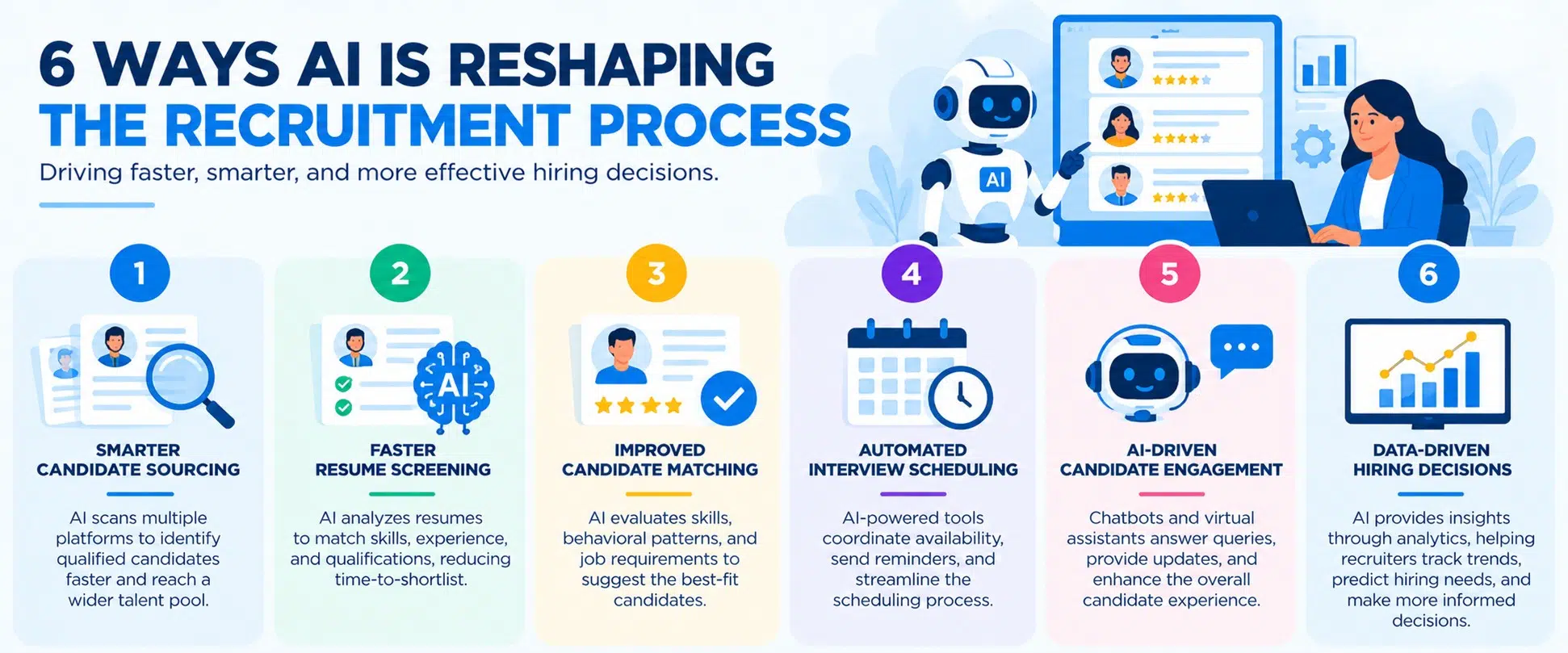
It cannot be denied that technology has become one of the pivotal staffing industry trends at present. AI-powered recruitment and staffing have already gained momentum. In 2026, it holds a significant place in the hiring process. From sourcing candidates to scheduling interviews, AI-powered tools have streamlined the overall hiring process. AI-driven chatbots also respond quickly and efficiently to candidate queries, enhancing their experience. With AI-oriented screening and sourcing tools, recruiters can cut hiring time and eliminate potential bias, refining the recruitment process.
Benefits expansion remains a major staffing trend this year. Beyond health and medical coverage, job seekers are increasingly seeking flexible work arrangements for a better work-life balance. Mental health has also become a core focus for job seekers. Contingent workers, hired through contract staffing services now expect roles that meet these work-life balance expectations. To attract top talents, employers must prioritize employee benefits, whether hiring a contingent worker or a permanent team member.
Key Staffing Industry Trends Remote Work and Social Media Transforming Recruitment
Flexibility has become a critical expectation for job seekers, and remote work is central to this shift. Employers should embrace remote work to attract skilled candidates for on-demand roles. Remote work benefits not only employees but also organizations, making it a smart strategy for hiring teams. While engaging remote workers, recruiters must assess candidates’ soft skills like communication, collaboration, and teamwork to ensure effective results.
Social media channels, such as LinkedIn, have emerged as essential tools for recruitment. These platforms expand the scope for finding skilled candidates. Besides LinkedIn, other platforms like Facebook and Instagram are gaining traction, especially among younger job seekers. Organizations leveraging these platforms must go beyond traditional job posts and create engaging content to attract top talents.
Staffing Industry Trends Skill-Based Hiring and Upskilling for Workforce Evolution
Amidst significant changes in the global business landscape, there’s a growing emphasis on skills over traditional qualifications. Recruiters now prioritize competencies, knowledge, and future potential when advertising job roles. This shift, a hallmark of modern staffing agency trends, enables organizations to connect with motivated candidates, increasing employee retention rates.
Skill-based hiring introduces diverse and versatile candidates into the workforce, fostering innovation and fresh perspectives. Organizations must also consider partnerships with educational institutions to directly access skilled graduates. Additionally, upskilling and training initiatives demonstrate a company’s commitment to career progression, boosting employee satisfaction and retention.
Conclusion
The staffing industry trends for 2026 revolve around embracing technological advancements and addressing modern workplace demands. From AI-powered recruitment tools and benefit expansion to leveraging social media and adopting skill-based hiring, these staffing trends are redefining recruitment strategies.
At Denken Solutions, we integrate cutting-edge staffing industry trends, including AI-driven tools, remote work policies, and skill-based hiring practices, to provide staffing solutions that help clients build exceptional teams. Collaborate with us to redefine the future of staffing and recruitment together!
FAQs:
1. How is predictive analytics changing workforce planning and recruitment?
Predictive analytics helps organizations analyze historical hiring data, workforce patterns, and business demand to anticipate future talent requirements. These insights can support recruitment planning, identify potential skill shortages, and help employers make more informed workforce decisions. However, predictions should be regularly reviewed against changing market conditions.
2. Why is candidate experience becoming an important factor in recruitment success?
Candidate experience influences how job seekers perceive an employer and whether they remain engaged throughout the hiring process. Clear communication, transparent job descriptions, timely updates, and streamlined applications can strengthen employer reputation, reduce candidate drop-offs, and support successful hiring outcomes.
3. How can organizations balance AI-driven recruitment with human decision-making?
Organizations can use AI-powered tools to support resume screening, candidate sourcing, and administrative tasks while retaining human oversight for evaluating experience, interpersonal skills, and job suitability. Regularly reviewing automated recommendations for accuracy and potential bias helps maintain responsible hiring practices.
4. How can Denken Solutions help businesses modernize their recruitment strategies?
Denken Solutions helps organizations address evolving hiring requirements through contingent staffing, specialized recruitment, and workforce solutions. By understanding employer needs and identifying relevant talent, Denken Solutions supports businesses seeking more adaptable and effective approaches to recruitment.
5. How can Denken Solutions support businesses experiencing rapid technological transformation?
Denken Solutions helps companies address technology-related workforce requirements by connecting them with professionals possessing relevant technical expertise. Whether an organization is expanding IT operations, implementing new systems, or undertaking digital transformation projects, its specialized staffing solutions can support access to qualified talent.