Insurance companies usually experience sudden increase in volumes of claims because of natural disasters, severe weather events, accidents, and even the other large-scale incidents. During these periods, claims teams can end up facing major resource bottlenecks as they handle higher workloads, tighter deadlines, and increased customer expectations.
However, quickly hiring and training permanent claims professionals to take care of the demand spikes can get challenging. This is where contingent staffing will provide a flexible workforce solution. By accessing skilled claims professionals on demand, insurance companies can easily scale operations, reduce processing delays, and maintain service quality during high-volume claim periods.
In this blog, we will discuss the role of contingent staffing in helping insurers scale claims operations, evaluate insurance staffing vendors properly, handle workload fluctuations, and respond effectively during claim surges.
Why insurance companies face claims resource bottlenecks
Insurance companies are required to handle claims efficiently while also ensuring compliance, customer satisfaction, and accuracy. However, a sudden increase in the volume of claims, limited availability of talent, and changing business requirements can create resource-related issues that can affect claims staffing vendor performance.
1.Sudden increase in the volume of claims
Major events like natural disasters, huge weather-related incidents, accidents, and other unexpected events can result in a large number of claims within a short period. Existing claims teams can struggle to handle the increased workload. This can lead to longer processing times and increased operational pressure.
2. Shortage of experienced claims professionals
Professionals who work with claims require professionals with knowledge of insurance policies, reviewing documentation, investigation process, and customer communication. Finding experienced talent usually gets quite tough. This is especially true when companies need extra support at the earliest. Insurance contract staffing accountability starts with qualified professionals, clear responsibilities, and reliable workforce processes.
3. Varying workforce requirements
The number of incoming claims demand is not always going to be constant. Insurance companies can experience periods of high activity followed by normal claim volumes. Maintaining a large permanent workforce to handle temporary increases can create challenges with workforce utilization and operational costs.
4. Increases complications related to claims
Modern insurance claims usually need a detailed evaluation of documentation, strong management, compliance checks, and on-time coordination between multiple parties. Complicated claims need skilled talent who can analyze data accurately and make timely decisions.
5. Pressure to maintain customers’ expectations
Policyholders usually expect quick communication, on-time updates, and efficient claim resolution. When claims teams tend to become overloaded, there will be delays in responses, and processing can impact customer experience and overall satisfaction.
How claims resource bottlenecks impact insurance companies
Claims resource-related issues can create major challenges for insurance companies by affecting operational efficiency, customer experience, and the ability to respond quickly during periods of high demand. When claims teams do not have enough support to handle the increasing workloads, insurers might experience delays and increased pressure across their operations.
1. Longer processing times for claims
When claims volumes increase way beyond the usual capacity of the existing teams, processing and reviewing claims can take quite long. Delays in reviewing documentation, assessment, and approvals can significantly slow down claim settlements and impact the overall operational performance.
2. Reduces customer satisfaction
Policyholders expect on-time communication and efficient claim resolution. This is especially during stressful situations. Limited claims resources can result in slow responses, delayed updates, and a less efficient customer experience.
3. It increases workload on the existing teams
During a high number of incoming claims, internal teams usually have to take on additional responsibilities to handle the growing amount of work. This increase in pressure can significantly affect productivity and the well-being of employees. Additionally, it can also negatively affect the ability to maintain consistent quality of service.
4. High costs of operations
When claims teams are overwhelmed, insurers may have to rely on overtime, temporary solutions, or emergency hiring to meet demand. These approaches can increase operational expense and reduce efficiency.
How will contingent staffing help insurers overcome claims workforce challenges?
Insurance staffing vendor evaluation is very important. This is because it requires the talent to respond quickly when claim volume increases. However, building a permanent workforce for temporary demand spikes can get challenging. Contingent staffing will provide insurers with a flexible approach to access skilled talent, expand operational capacity, and maintain efficient claims processing during changing business conditions.
1. Access skilled claims professionals quickly
Contingent staffing will allow insurance companies to connect with experienced professionals who already understand the process of claims, documentation requirements, policy review, and customer communication. This will help insurers address immediate workforce gaps without having to wait through lengthy recruitment cycles.
2. Scale claims teams depending on demand
The volume of claims can change significantly based on various factors. This includes any catastrophe event, seasonal trends, and unexpected incidents. Contingent staffing will enable insurers to increase claims support during periods of high volume and adjust workforce capacity when demand comes back to normal.
3. Supports catastrophe response operations
During major events like hurricanes, floods, wildfires, or other large-scale incidents, insurers might receive a sudden increase in claims. Contingent claims professionals can provide extra support for claims intake, documentation review, processing, and customer assistance to help in handling the increased workload.
4. Reduces pressure on the internal claims teams
Additional workforce support will help in distributing workloads more efficiently. This will allow internal teams to focus on complicated claims and important operational responsibilities while contingent talent helps with increased claim volumes.
5. Improves the efficiency of claims processing
By adding experienced resources when required, insurance companies can improve turnaround times, reduce backlogs, and maintain consistent service levels during periods of high demand. Evaluating claims staffing vendor performance is important to improve the efficiency of claims processing.
Related read: How insurance companies use contract staffing during crisis events and regulatory changes
How Denken Solutions helps insurance companies scale claims teams with contingent staffing
Insurance companies have to maintain the claims capacity even when the volumes of claims fluctuate. During any unexpected events, seasonal increases, or periods of operational changes, depending just on the permanent employees can make it quite tough to add the resources needed. Denken Solutions will help insurance companies to build a flexible claim teams by enabling access to contingent professionals depending on the changing workforce requirements.
1. Access to qualified talent
Denken Solutions will help insurers to identify talent with relevant experience across multiple insurance operations and claims. This will allow companies to add resources with the skills needed for specific claims workflows and operational needs.
2. Support temporary requirements
Not every workforce would need a permanent hire. Denken Solutions provides insurance temporary staffing will help support insurers who require additional talent for temporary assignments, certain projects, seasonal workloads, or short-term requirements.
3. Ensure complete background verification
Denken Solutions will conduct complete background verification of candidates before placement, helping insurance companies access talent who have been screened and verified as per the required staffing process.
Conclusion
The volumes of incoming claims can change quickly. This creates resource bottlenecks, which put resource bottlenecks. This puts pressure on the insurance companies and the internal teams. A contingent staffing provider is a great way to get access to skilled talent, scale the teams, and handle temporary gaps in the workforce. With the right strategy in place, background-verified professionals, and access to qualified talent, insurers can become our customer build an adaptable workforce that can respond to changing claims demands while also supporting efficient and consistent claims operations.
FAQs:
1.What is contingent staffing in the insurance industry?
Contingent staffing allows insurance companies to access skilled professionals for temporary, project-based, seasonal, or changing workforce requirements without relying solely on permanent hiring.
2. How can contingent staffing help insurance companies manage claims surges?
Contingent staffing allows insurers to add claims professionals when claim volumes increase, helping expand workforce capacity and manage additional workloads during high-demand periods.
3. When should insurance companies consider contingent claims staffing?
Insurers can consider contingent staffing during catastrophe events, seasonal claims increases, growing claims backlogs, temporary workforce shortages, or when additional support is needed for specific projects.
4. How can Denken Solutions help insurance companies with contingent staffing?
Denken Solutions helps insurance companies access qualified professionals for temporary, project-based, seasonal, and high-volume staffing requirements, including claims operations.
5. What types of insurance professionals can Denken Solutions provide?
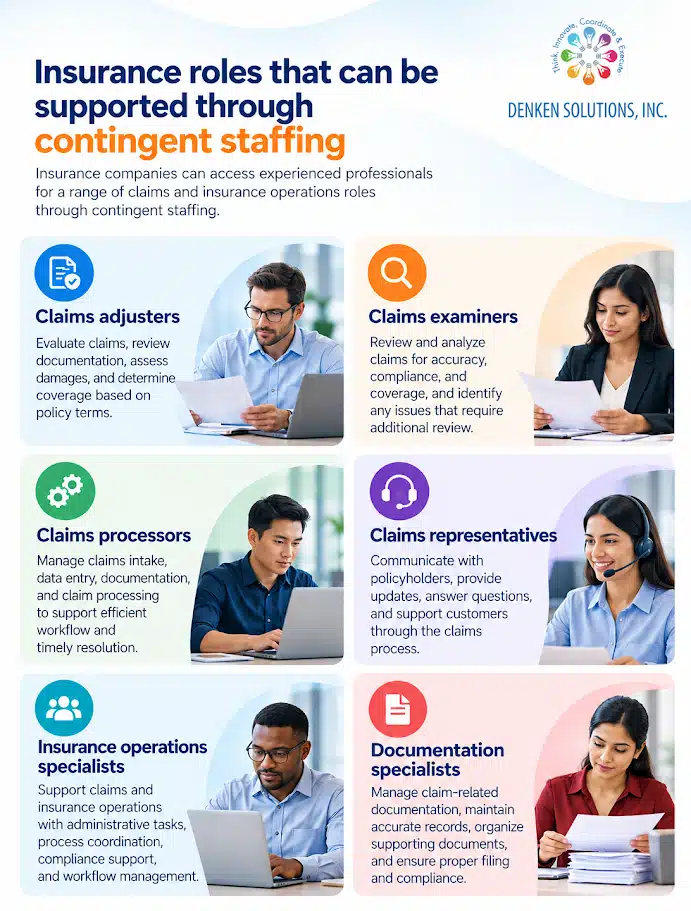
Depending on the requirement, Denken Solutions can help companies hire professionals for claims processing, claims administration, customer support, documentation, insurance operations, and other specialized functions.