Insurance companies usually experience a sudden increase in workloads. This is especially true during times of crisis, high-volume claims periods, and regulatory changes. These situations usually need quick access to skilled talent who would help support claims processing, compliance, customer service, and administrative operations without slowing business-related activities. Instead of committing to permanent hires for temporary needs, multiple insurers will use contract staffing and insurance staffing services to efficiently scale their workforce, improve their operational efficiency, and maintain service quality during periods of uncertainty.
In this blog, we have explored how contract staffing will help insurance companies respond to ever-changing demands and build an increasingly flexible workforce.
Why do insurance companies require flexible staffing solutions?
Insurance companies usually experience a lot of unpredictable changes in workload because of crises, regulatory updates, surges in claims, and seasonal demands. These situations require quick access to skilled talent who can support important operations without creating any long-term workforce challenges. Flexible staffing solutions will help insurers to adapt quickly, maintain quality of service, and handle changing business requirements efficiently. Some of the reasons why insurance companies need flexible staffing solutions include:
1. Handling sudden changes in workload:
Insurance companies might experience a sudden increase in claims, customer inquiries, and administrative tasks during any unexpected events. Flexible staffing will enable your business to quickly add professionals and also maintain a smooth flow of operations. Additional workforce support will help in reducing pressure on internal teams and improve response time.
2. Accessing specialized insurance-related talent when required:
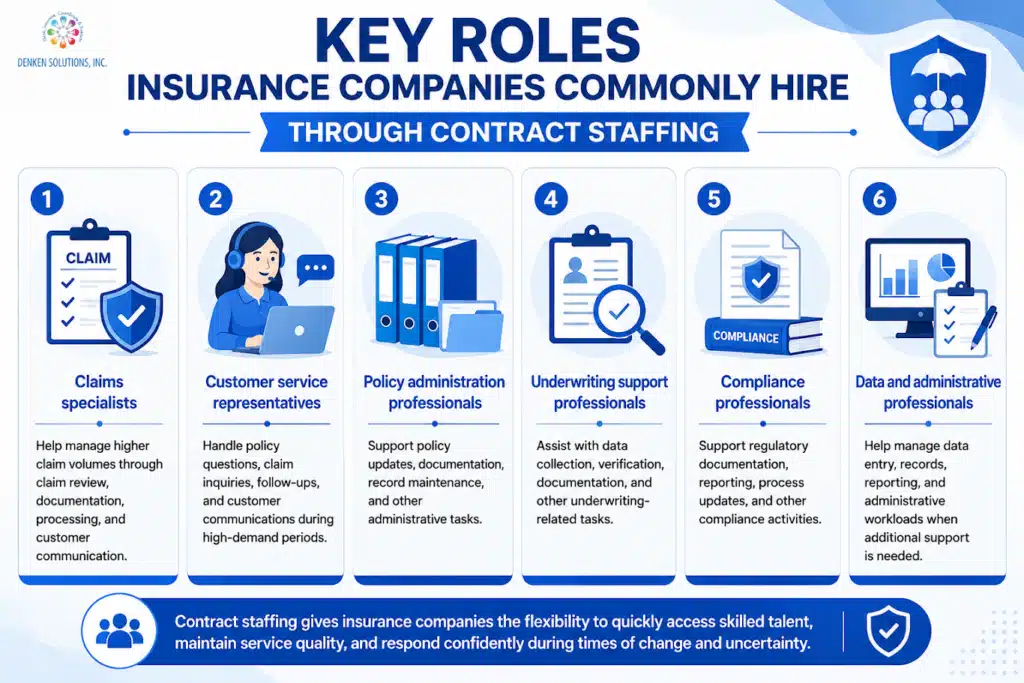
Different situations will need talent with certain knowledge and experience. Contract staffing will help insurance companies access skilled resources in areas like claims processing, underwriting support, compliance, customer service, and policy administration. Companies can also bring talent without really committing to permanent hires.
3.Improving cost efficiency and operational flexibility:
Permanent hiring might not always be appropriate for businesses with temporary requirements. Flexible staffing will enable insurers to scale teams depending on demand while also controlling costs of the workforce. This way, companies can focus their internal resources on strategic initiatives while contract talent will handle additional workloads.
Common workforce challenges insurance companies face during any crisis
A crisis can often significantly impact insurance operations by creating a sudden increase in claims, customer requests, and administrative workloads. During such periods, internal teams will usually face pressure to handle higher volumes while also maintaining accuracy, compliance, and customer satisfaction. Without any additional workforce support, insurance companies can experience delays, an increase in employee burnout, and operational challenges.
1. Managing claims during high volumes:
Crisis-related events usually result in a sudden increase in insurance claims, which need quick review, resolution, and processing. Internal teams can struggle to handle increased workload while also maintaining normal operations. Any delays in processing claims can affect customer experience and overall performance of the business.
2. Maintaining the quality of customer service:
During any periods of high demand, insurance companies tend to receive way more customer inquiries related to claims, coverage, and policies. Limited capacity of staffing can result in longer response times and reduced customer satisfaction. Additional support is usually required to ensure customers receive assistance and on-time communication.
3. Preventing operational delays and employee burnout:
During any situation of crisis, employees can face extended working hours and increased workloads. Continuous pressure can significantly impact productivity, employee well-being, and accuracy. Additionally, staffing support will help distribute workloads and also allow internal teams to focus on the primary responsibilities.
4. Adapting to the evolving regulatory requirements:
When there are any changes in regulations, companies will need to update processes, documentation, and reporting procedures quickly. Internal teams might need additional resources to handle compliance-related tasks. Access to professionals with relevant experience will help companies adapt without interrupting everyday operations.
How contract staffing helps insurance companies handle demand surges
Insurance companies usually experience these sudden increases in workloads because of major events, regulatory changes, periods of seasonal claims, or unexpected demands in the business. Handling these fluctuations with an internal team can create a huge operational pressure and can impact the quality of the service. Contingent staffing tends to provide a flexible solution by bringing in experienced talent when required the most. This helps them handle increased workloads while also maintaining operational stability.
1. Scaling teams efficiently during periods of peak demand:
Contract staffing will enable insurance companies to add qualified talent without making them wait through long hiring processes. Companies can easily increase workforce capacity to handle high volumes of claims, customer inquiries, and administrative tasks. This flexibility will help insurers to respond quickly to changing business requirements.
2. Accessing skilled insurance talent:
Contingent staffing will provide access to professionals with vast experience in key insurance functions. This includes processing claims, customer service, policy administration, underwriting support, and compliance operations. Companies can easily bring in specialized talent depending on the immediate requirements.
3. Maintaining flow of business:
During demand fluctuations, insurance companies have to continue delivering on-time services while also managing the increased amount of workload. Contingent talent will help in supporting primary operations and reduce pressure on existing employees. This will allow internal teams to focus on strategic tasks while additional resources will handle the high-volume activities.
4. Improves operational efficiency:
Contract staffing will help businesses handle temporary workforce requirements without increasing the long-term commitment of hiring. Insurance companies can easily optimize resources depending on workload demands and priorities of the business. A flexible workforce model will help improve productivity, reduce any delays, and also enhance customer satisfaction.
How insurance companies can build an effective contract staffing strategy
A successful contract staffing strategy will need way more than just quickly filling open positions. Insurance companies need a structured approach that also identifies workforce needs, selects the right talent, and ensures that contract professionals can integrate smoothly with the current teams. By planning and partnering with the right staffing provider, insurers can build a flexible workforce model that will support business and respond effectively to changing demands. Insurance companies can build an effective contract staffing strategy by following the steps below:
1. Identify workforce requirements before demand increases:
- Insurance companies tend to evaluate areas where additional support might be needed during periods of high demand.
- Identifying important roles in advance will help organizations to respond quickly when workloads tend to increase.
- Common areas that will need contract support also include:
- Processing claims
- Customer service
- Policy administration
- Compliance support
- Data management
2. Partner with a staffing provider who has insurance experience:
- Working with a staffing partner who understands the insurance industry will help companies access qualified professionals quickly.
- An experienced provider will help in identifying candidates with the correct skills, certifications, and knowledge of the industry.
- The right partner will also support onboarding, screening, and workforce management.
3. Define performance expectations clearly:
- Clear job responsibilities will help contingent talent understand their priorities from the very start.
- Companies should establish:
- Required experience and skills
- Performance goals
- Communication processes
- Reporting expectations
- This will ensure better collaboration between the internal teams and also contract employees.
4. Ensure compliance management and a smooth onboarding process:
- Even temporary team members will require proper onboarding to work efficiently.
- Insurance companies should provide access to necessary systems, processes, and compliance guidelines.
- Proper training and documentation will help contract professionals to contribute quickly while also maintaining standards of the industry.
5. Adjust staffing needs and monitor performance:
- Workforce requirements can change quickly during crises and regulatory updates.
- Regular performance reviews will help companies understand if additional support is required or adjustments are needed.
- A data-driven approach will allow insurers to optimize staffing levels and improve workforce efficiency.
How Denken Solutions helps insurance companies hire contingent staff
Denken Solutions is a staffing platform that helps companies hire qualified contingent talent depending on the workforce needs. For insurance companies, this simply means gaining access to skilled talent without adding unnecessary complications to the hiring process. From sourcing and screening candidates to supporting MSP/VMS requirements and coordinating the hiring process, Denken Solutions will help insurance organizations build flexible teams that can adapt to changing workloads, project requirements, and business demands.
1. Understanding the requirements of staffing:
Denken Solutions works with insurance companies to understand the workforce requirements. This includes the role, required skills, project requirements, experience, and expected duration. This will help in creating a focused hiring approach and also identify candidates who align with the position.
2. Sourcing qualified contingent talent:
Denken Solutions uses targeted recruitment strategies to connect companies with professionals across claims processing, policy administration, customer service, underwriting support, compliance data management, and other insurance-related functions.
3. Evaluating and screening candidates:
Candidates are judged based on their relevant experience, communication abilities, skills, and role-specific requirements. This will help insurance companies spend less time reviewing unsuitable profiles and focus on candidates who are aligned with their needs.
4. Helping companies scale the workforce:
When the volume of claims increases or business requirements change, companies might require additional workforce quickly. Denken Solutions will help insurance organizations access contingent talent so that they can increase the workforce capacity without making every position a permanent hire.
Conclusion:
Insurance companies need the ability to respond quickly when workloads increase, claims surge, or regulatory requirements change. Contract staffing provides the flexibility to bring in skilled professionals when additional support is needed without creating unnecessary long-term hiring commitments. From claims processing and customer service to compliance and administrative functions, contingent professionals can help insurers maintain productivity and service quality during periods of change. With the right staffing strategy and a reliable partner such as Denken Solutions, insurance companies can build a more agile workforce that is prepared to respond to both immediate challenges and future business demands.
FAQs:
1. What roles can insurance companies hire through contract staffing?
Insurance companies can use contract staffing for roles such as claims processing, customer service, policy administration, underwriting support, compliance, data management, and other administrative functions.
2. How does contract staffing help during a claims surge?
Contract staffing allows insurers to add qualified professionals quickly, helping manage higher claim volumes, customer inquiries, and administrative workloads while reducing pressure on internal teams.
3. Can contract staffing help insurance companies manage regulatory changes?
Yes. Contract professionals with relevant experience can provide additional support for compliance-related tasks, documentation, reporting, and process updates when regulations change.
4. How does Denken Solutions help insurance companies hire contingent staff?
Denken Solutions is a staffing platform that helps companies hire qualified contingent talent based on their workforce needs. It supports sourcing, screening, MSP/VMS requirements, and hiring coordination.
5. How does Denken Solutions screen contingent candidates?
Denken Solutions evaluates candidates based on relevant experience, skills, communication abilities, and role-specific requirements before presenting candidates to insurance companies.