Being laid off creates uncertainty; however, it can also open the door to new career opportunities. While searching for a permanent position may be your first step, contingent work offers a flexible way to keep building your skills, gain valuable experience, and maintain income while you explore your next long-term opportunity.
With companies increasingly depending on skilled contingent talent to support projects, fill any talent gaps, and scale their teams, contingent roles have become a valuable career path for multiple professionals. Whether you are looking to stay active in your industry, expand your network, or transition into a new role, contingent work can provide the flexibility and experience required to move forward.
In this blog, we have explored how contingent work will help you to navigate a career transition after a layoff, the advantages it will offer, and why it can be a strategic step towards your upcoming opportunity.
What is contingent work?
Contingent work refers to employment arrangements where individuals are hired on a temporary, project-based, or contract basis rather than as full-time employees. Instead of committing to long-term roles and engage in assignments that match their skills, career goals, and availability. These roles range from short-term projects and contract-based positions to freelance work and consulting engagements.
In the freelance work setup, workers have the flexibility to choose the type of work they want to do, the industries they wish to explore, and the duration of every assignment. Companies take advantage of contingent workers by filling skills gaps quickly, scaling teams on demand, and accessing specialized expertise without any long-term commitments.
Contingent work is becoming an increasingly sought-after option in the current job market, driven by the rise of remote work, digital collaboration tools, and the growing need for flexible staffing solutions. For professionals recovering from a layoff or looking to diversify their career path, freelance work will offer a practical and empowering way to stay active, earn consistently, and build valuable experience across multiple roles.
Why is contingent work a strong choice after a layoff?
A layoff can create a level of uncertainty; however, it can also be a chance to explore new career-related opportunities and build professional momentum. Contingent work will provide flexibility. This allows professionals to continue working, develop their skills, expand their networks, and also stay connected to their industry while searching for their next long-term roles.
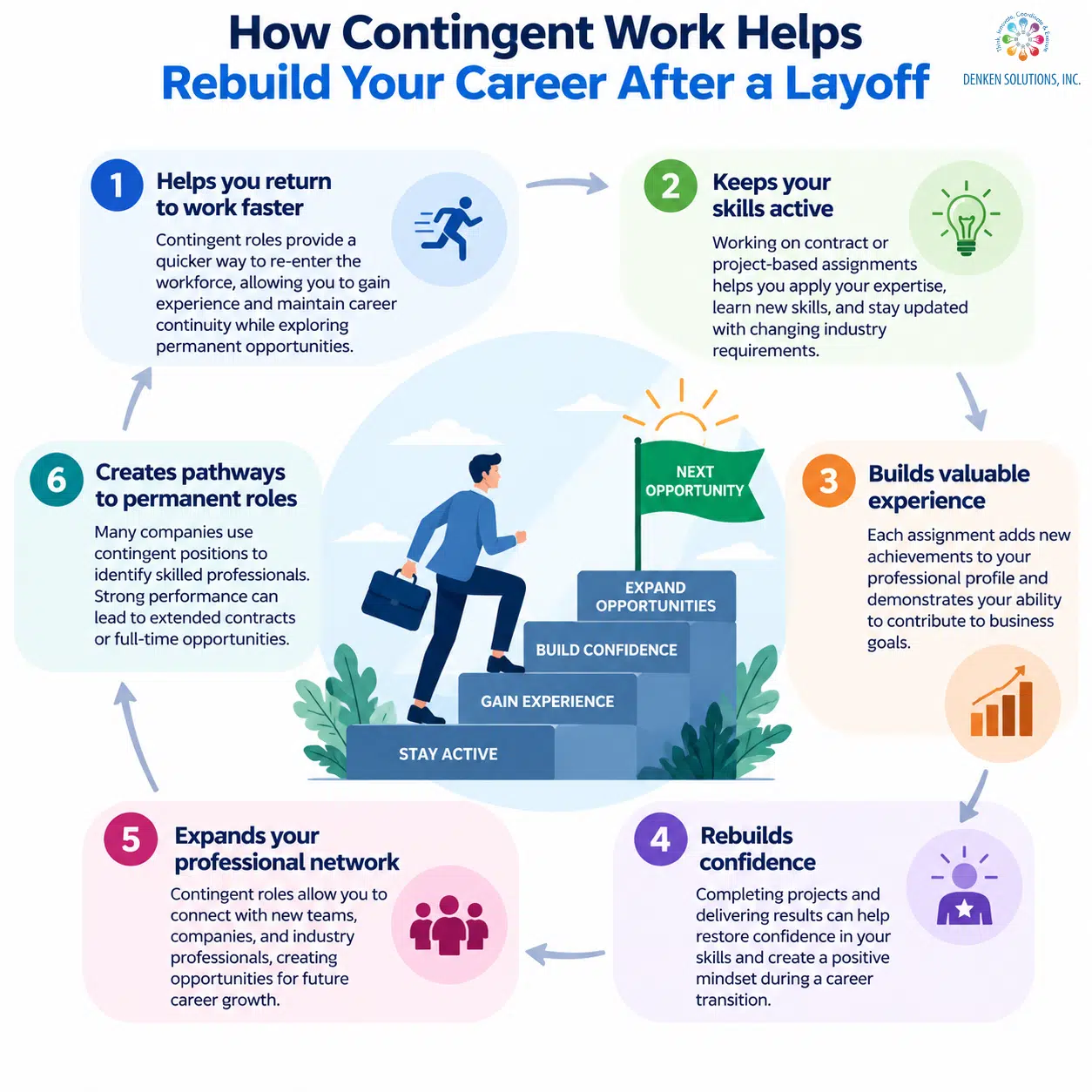
1. Maintaining income flow during the job search process
Contingent roles will provide a way to continue earning while still looking for permanent employment. Contract or temporary assignments will offer financial stability and help talent handle expenses during a career transition.
2. Helps in keeping skills active and relevant
Extended periods away from work can make it quite difficult to stay competitive. Contingent assignments will allow professionals to continue applying their expertise, learn new tools, and also gain experience with multiple projects and teams.
3. Expand the professional network
Working with multiple companies and teams will help in building valuable professional relationships. These connections can help in gaining future opportunities, referrals, and insights into career paths.
4. Enables exposure to new opportunities and industries
Contingent work will allow professionals to explore multiple roles, industries, and work environments without any immediate commitment to a permanent position. This flexibility will help in identifying career paths that align with evolving goals.
5. Creates a path towards permanent employment
Various organizations use contingent roles to evaluate talent even before making a long-term hiring decision. A successful contract assignment can demonstrate your capabilities and can open the door to a full-time opportunity.
How Contingent Work Prevents Resume Gaps
Taking on contract assignments will ensure you maintain professional continuity. You tend to stay productive, get new experiences, and keep your profile active. All of which is important when applying for future roles.
1. High earning potential for special skills
Various contingent roles pay competitive rates, especially in technical, healthcare, and creative fields. Since companies pay for focused expertise, specialists often earn more per hour or per project than in traditional roles.
2. Opens up full-time opportunities
Contingent work frequently acts as a stepping stone for long-term employment. Once strong contractors prove their worth, many businesses turn them into full-time employees.
3. Expand your skills and industry exposure
Temporary and project-based opportunities will help in developing new skills while also strengthening existing ones. This additional experience will make your resume more competitive and show potential employers which you continue to grow professionally.
How does contingent work help in rebuilding confidence after a layoff?
A layoff will impact your confidence and also create uncertainty regarding your future. Contingent work will help you to regain momentum by providing opportunities to apply your skills, achieve professional goals, and reconnect with the workforce by taking on a meaningful project and contributing to business outcomes; professionals can help rebuild confidence while also preparing for the next career step.
1. Promotes a sense of routine and purpose
After a layoff, losing your everyday routine can get extremely challenging. Contingent roles will help in restoring a sense of routine by giving professionals new responsibilities, goals, and projects to actually focus on.
2. Helps you to recognize your value
Working on a new assignment will allow you to see the impact of your experience and skills. Completing a project can reinforce your confidence and remind you of the expertise you bring to a company.
3. Create opportunities to achieve a quick win
Contingent roles usually involve specific projects or business-related needs where professionals can make an immediate impact. Completing these assignments will provide measurable achievements that can boost confidence and strengthen your professional profile.
4. Encourages constant growth and learning
New contract opportunities can expose you to multiple industries, technologies, and processes. Learning and adapting to new environments will help you to stay competitive and increase confidence in your ability to handle future challenges.
5. Building professional connections and networks
Collaborating with new teams and companies will help in expanding your network. Positive experiences and relationships built via contingent work can create encouragement, referrals, and future career opportunities.
Who is the best fit for contingent work?
Contingent work can be a valuable option for professionals with different career goals, work preferences, and life situations. It will provide an opportunity to continue building experience, applying existing skills, exploring new opportunities, and maintaining career momentum. Whether you are navigating a career transition, looking for flexibility, or seeking new challenges, contingent roles can provide a practical path moving forward.
1. Professionals recovering from a layoff
For professionals who have lost a job recently, contingent work can help in bridging the gap between employment opportunities. It will allow them to continue earning income, stay engaged in their industry, and avoid any extended gaps on their resume while also searching for a permanent position.
2. Professionals looking for increased flexibility
Contingent roles are a strong fit for individuals who want increased control over their work schedule, projects, or workplace arrangements. These opportunities can provide flexibility while also allowing professionals to contribute their expertise and achieve meaningful career goals.
3. Skills that are in high demand
Professionals with specialized skills, technical expertise, or industry experience can benefit from contingent opportunities which allows them to contribute to certain business requirements. These roles usually enable skilled workers to apply their knowledge across different projects and organizations.
4. Career changers exploring new opportunities
For individuals considering a career change, contingent work will offer a way to gain experience in a few fields without making an immediate long-term commitment. Professionals can test multiple roles, develop new skills, and understand if a new career direction will align with their goals.
5. Independent and freelance professionals
Independent and freelancer professionals who enjoy working on diverse projects can benefit from contingent roles. These opportunities will allow them to expand their portfolio, work with various organizations, and also build a broad range of professional experiences.
How does Denken Solutions support contingent workers?
Denken Solutions plays an important role in assisting professionals in transitioning smoothly into contingent work by connecting them with the right opportunities and providing complete support throughout their assignments. Denken makes sure you have the tools, support, and security you need to thrive in the contingent workforce so, whether you’ve recently been laid off or are looking into flexible work choices.
1. Connect talent with the right opportunities
Denken Solutions will help contingent workers gain access to contract and project-based opportunities that match their experience, skills, and career objectives. Through targeted talent matching, professionals can easily find roles where they can make a meaningful impact.
2. Provides access to diverse career opportunities
Contingent workers can explore opportunities across various industries, organizations, and roles. This exposure will allow professionals to expand their experience, develop new skills, and also build a strong professional profile.
3. Supports a smooth hiring process
From candidate screening to placement support, Denken Solutions will help simplify the process of finding and starting a new contingent role. This will allow professionals to focus on preparing for their assignments while also reducing administrative challenges.
4. Helps professionals stay career-ready
Denken Solutions will support contingent workers by helping them connect with opportunities that will keep their skills active and relevant. Working on multiple assignments will help professionals gain valuable experience and remain competitive in a changing job market.
Partnering with an experienced contingent staffing provider helps organizations quickly find qualified talent while maintaining workforce flexibility.
Conclusion
After a layoff, contingent work provides a strong route forward by allowing you to rebuild your career, build your abilities, and pursue new opportunities without making long-term commitments. It opens doors to a variety of professions across industries and helps you stay active, earn consistently, and restore confidence. Contingent work provides a strategic career benefit for professionals who want to advance with mobility and purpose, not merely a short-term fix.
FAQs
1. Why should I consider contingent work after being laid off?
Contingent work can help you stay active in the workforce, continue earning income, and build valuable experience while searching for your next permanent opportunity. It also allows you to strengthen your skills, expand your network, and explore different career options.
2. Can contingent work help reduce employment gaps on my resume?
Yes. Taking on contract or project-based assignments allows you to continue gaining professional experience and demonstrate your skills to future employers. It shows that you remained engaged in your field and continued contributing to business goals.
3. How can contingent work help rebuild my confidence after a layoff?
Contingent work provides opportunities to apply your skills, achieve professional goals, and contribute to meaningful projects. Completing assignments can help rebuild confidence and remind you of the value you bring to an organization.
4.How does Denken Solutions help professionals find contingent work opportunities?
Denken Solutions helps professionals connect with contract and contingent job opportunities that match their skills, experience, and career goals. Through its staffing expertise, Denken Solutions helps candidates find roles where they can apply their expertise and contribute to business success.
5. How does Denken Solutions match candidates with the right contingent roles?
Denken Solutions evaluates candidate skills, experience, and career objectives to connect them with opportunities that align with their professional background. This helps candidates find assignments where their capabilities match employer requirements.