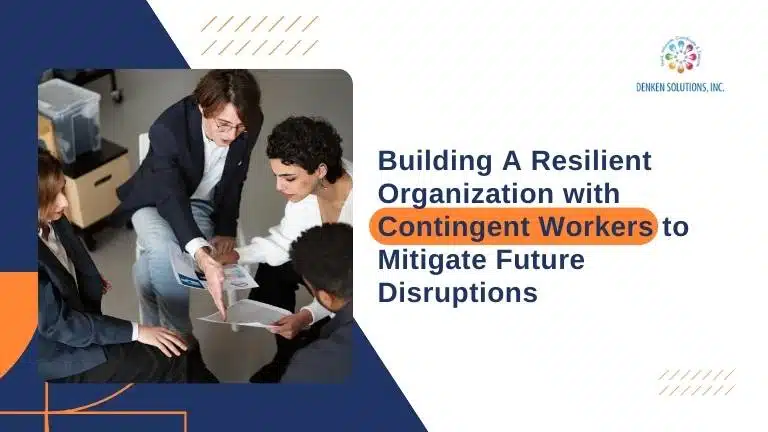
Contingent staffing has become one of the most strategic tools organizations rely on to build workforce resilience. Instead of treating staffing as a simple, one-time function, they are slowly building resilient workforce models that can also handle difficulties, adapt quickly, and maintain continuity under pressure. This shift has also resulted in a broader move towards a workforce resilience strategy, which prioritizes flexibility and preparedness.
Lately, contingent staffing has become one of the most effective tools for managing workforce disruption and mitigating staffing risk. When implemented strategically, it will enable organizations to operate with confidence even amid unpredictable labor conditions and support long-term workforce continuity planning.
In this blog, we explain in detail how to build a resilient organization by leveraging a contingent workforce to navigate future disruptions.
Why Contingent Staffing Is Critical for Workforce Resilience
Contingent staffing matters since it will directly address the most common workforce risks that organizations tend to face lately:
- Employees are taking unpredictable leaves due to illness, personal emergencies, or burnout.
- Labor shortages can make traditional hiring slower and less reliable
- Union activity or strike exposure, which can affect operations without any warning
- Fluctuation in demand caused by a shift in the market or supply chain disruptions
- Cost pressure, which makes over staffing financially unsustainable
These challenges push organizations to adopt staffing risk management and resilience-driven workforce models.
5 Core Components of a Contingent Staffing Strategy
An effective contingent staffing strategy is way more than just filling temporary positions. Organizations tend to use contingent staffing services to improve workforce flexibility, reduce any hiring risks, and maintain business continuity. To be successful, businesses require key components such as workforce planning, talent sourcing, compliance, and an effective management process. Some of the primary components of effectively hiring contingent staff include:
Identifying risks and planning strategies:
Organizations should initially identify where any disruptions are most likely to occur. This includes analyzing historical leave patterns, turnover rates, union exposure, seasonal demand spikes, and operational dependency as a part of broader labor disruption planning.
Important role mapping:
Not all roles carry the same operational risks. A contingency plan will clearly identify which positions are critical to a project and require immediate coverage to maintain workforce resilience.
Pre-approved staffing partners:
Looking to identify a staffing partner during a time of crisis will waste your valuable time. Resilient organizations will establish relationships with experienced temp staffing agencies well in advance.
Defined activation triggers:
Clear thresholds should be established for the contingent staff being hired. Primary examples include absenteeism exceeding a certain percentage, production output falling way below target, or customer backlog exceeding capacity.
Compliance and legal guidelines:
Plans should account for labor laws, union compliance, safety requirements, and classification rules to avoid legal exposure in high-pressure situations.
7 Benefits of Effective Contingent Workforce Management
Effective contingent workforce management can bring various benefits to your company, including access to specialized skills, increased flexibility, and greater responsiveness. There is usually a lot of focus on the benefits and challenges of contingent workers themselves; however, it is also important to recognize the need to handle and administer this growing area efficiently.
Economic flexibility
Successful contingent workforce programs will encourage your company to leverage and grow a flexible workforce. This will enable them to become increasingly competitive and resilient, especially during periods of disruption or economic fluctuations.
Response to the fluctuations in the markets
Various modern organizations are lately interested in balancing and rightsizing the external workforce in the coming years. To achieve this goal, your businesses would have to nurture and invest in the best contingent workforce teams and solutions.
Affordability
Around 40% of companies term cost-saving initiatives as a reason behind hiring contingent staff. Effective management strategies are important for achieving a desired outcome in contingent workforce hiring.
Flexibility in planning workforce
Flexibility is the top reason for businesses, as it enables you to adjust your budgets and supports agile decision-making. However, this goal cannot be easily achieved without any strong contingent workforce management resources and strategies.
Access to specialized skills
Contingent workforce management will help ensure that your company has access to a pool of highly specialized professionals on demand. The ability to expedite this process will help your business to be as responsive and competitive as possible.
Agility and scalability
The ability to scale labor capacity up or down as required will enhance organizational agility, making it easier to handle workload fluctuations driven by project-specific requirements.
Increased productivity and operational efficiency
Effective management of temporary personnel guarantees their smooth integration into organizational procedures.
Best Practices for Building a Disruption-Ready Workforce
Building a resilient organization will require more than just hiring contingent workers during periods of uncertainty. Businesses also require a proactive strategy that enables them to respond quickly to workforce disruptions while also maintaining continuity and productivity. The following best practices will help organizations to create a strong and increasingly adaptable workforce model.
Building talent pipelines before any disruptions
Waiting until a staffing shortage occurs can result in operational pressure and delays. Organizations will maintain and build talent pipelines in advance so that qualified professionals are available when the workforce requires any changes. Having access to pre-screened contingent talent will allow quick hiring and smooth transitions.
Identifying important workforce gaps
Organizations should constantly evaluate which roles and skills are important for maintaining business continuity. Identifying workforce gaps early will allow businesses to determine where contingent workers can provide support during unexpected disruptions or demand shifts.
Partner with a reliable staffing provider
Working with an experienced staffing partner will improve access to specialized talent and will reduce hiring challenges. Staffing providers with established talent networks can quickly connect businesses with skilled contingent professionals while also ensuring compliance and hiring efficiency.
Use workforce analytics and forecasting
Data-driven workforce planning will help organizations in predicting staffing requirements before any disruptions occur. Analyzing hiring trends, employee turnover, seasonal demand, and business growth patterns will allow organizations to make informed workforce decisions and prepare for future challenges.
Creating a workforce continuity plan
Business continuity typically includes a workforce strategy. Organizations should develop contingency plans that outline how staffing needs will be addressed during crises, labor shortages, or sudden operational changes. This preparation will reduce downtime and improve organizational efficiency.
Also read: 10 Best Practices In Effective Contingent Workforce Management
How Denken Solutions helps businesses hire contingent staff
Denken Solutions will help businesses build a flexible workforce model by providing access to skilled contingent talent that supports changing business needs. Whether organizations require short-term support, project-based specialists, or rapid workforce expansion, Denken Solutions will simplify the hiring process and help companies stay prepared for workforce challenges.
Access to a huge network of talent
Denken Solutions will connect businesses with a huge network of qualified professionals across various roles and industries. This will allow organizations to find talent quickly without starting the hiring process from scratch.
Quick hiring process
Traditional hiring can take various weeks or months. Denken Solutions will help organizations scale teams up or down depending on the project requirements, seasonal demand, or unexpected workforce changes.
Flexibly scaling workforce
Business demands can change quickly. Denken Solutions will help organizations scale teams up or down based on project requirements, seasonal demand, or unexpected workforce changes.
Specialized access to talent
Certain roles need niche expertise, which can be difficult to find. Denken Solutions will help businesses to identify and hire skilled professionals with certain experience for project-based or temporary needs.
Reduces hiring risks
By handling candidate screening and workforce processes, Denken Solutions will help in reducing hiring challenges and support more efficient workforce planning.
Conclusion:
Contingent staffing has evolved way beyond just operational consideration. It is now a primary component of organizational resilience, business continuity, and operational excellence. In the current dynamic and unpredictable global landscape, organizations that proactively invest time and resources in a comprehensive workforce will undoubtedly gain a significant competitive advantage.
This will involve following various approaches, encompassing a thorough assessment of potential vulnerabilities, the deliberate cultivation of diverse talent pipelines, and the strategic adoption of flexible, adaptable technologies. Regardless of the source of labor disruptions, anticipated internal turnover, unforeseen resignations, large-scale external disasters like natural disasters, economic downturns, or global health crises, such an integrated strategy will put organizations in a position to successfully navigate and mitigate them.