Finance teams are primarily responsible for maintaining an accurate record, meeting reporting deadlines, and following complicated regulatory requirements. However, employee shortages, audits, peak reporting periods, and changing compliance standards can result in additional pressure on the internal teams and can increase the risk of errors.
Flexible finance compliance staffing solutions or contingent finance staff allow your business to hire experienced finance, audit, accounting, and compliance professionals when extra support is needed. By adding contingent staff to your team, your company can make internal processes stronger, maintain a proper reporting system, meet important deadlines without any hurdles, and also reduce any compliance-related risks.
In this blog, we have explored how flexible finance staffing will help businesses address compliance challenges, the roles companies can hire on a temporary or contract basis, and the best practices for handling a contingent professional efficiently.
What is a compliance risk in finance?
Compliance risk in finance-based companies is when there is a risk of your business dealing with legal, financial, or reputational issues. This will happen when the business fails to follow laws, accounting standards, tax rules, reporting requirements, or internal policies. These risks can also include situations like missed deadlines, inaccurate records, weak controls, payroll errors, improper approvals, and incomplete documentation.
Finance compliance is an important aspect during audits, financial reporting periods, tax filings, mergers, and business expansion. Even a small mistake can result in penalties, audit findings, delays in reporting, financial losses, or damage to the trust of the stakeholders. Businesses can reduce these risks by maintaining proper documentation, strengthening internal controls, assigning clear responsibilities, and also ensuring that finance teams have enough qualified support.
Common sources of compliance risk in finance companies
Finance companies are supposed to operate under strict regulations, reporting, data security, and consumer protection requirements. When internal team control is lacking, records are incorrect, personnel lack regulatory compliance staff, or procedures are not evolving in accordance with evolving laws and regulations, compliance risks may start to manifest. Finance companies are supposed to identify risks, improve oversight, and maintain proper reporting. This will help prevent fines, disruptions, and reputational damage. This is especially true during growth, audits, and system changes, shortage of staff, or periods of high transaction volume.
1.Data privacy and security issues
Handling customer data carries the risk of real legal exposure. Without the right policies, processes, and controls in place, a small mishap is not just a technical error; it can result in compliance issues within a small amount of time. The average cost of a data breach in the USA has reached a whopping $10.22 million in 2025, which is more than 9% from the previous year.
Realted read: Data Security Concerns in Contingent Staffing
2.BSA/AML violations
Bank Secrecy Act and anti-money laundering or countering the financing of terrorism (AML/CFT) compliance has been a regulatory priority for quite some time. The AML/CFT programs that do not anticipate regulatory scrutiny or which lack dynamic assessments and qualified oversight will leave organizations exposed to criminal and civil penalties.
3.Lending compliance-related issues
Businesses that lend money should follow the fair lending rules. This includes HMDA, CRA, and section 1071. Some federal enforcement has been reduced; however, these laws still apply and are valid. Additionally, the state attorneys general are also increasing their oversight. Therefore, decisions made today could still be reviewed years later under a different administration.
How contingent finance staffing reduces compliance risk
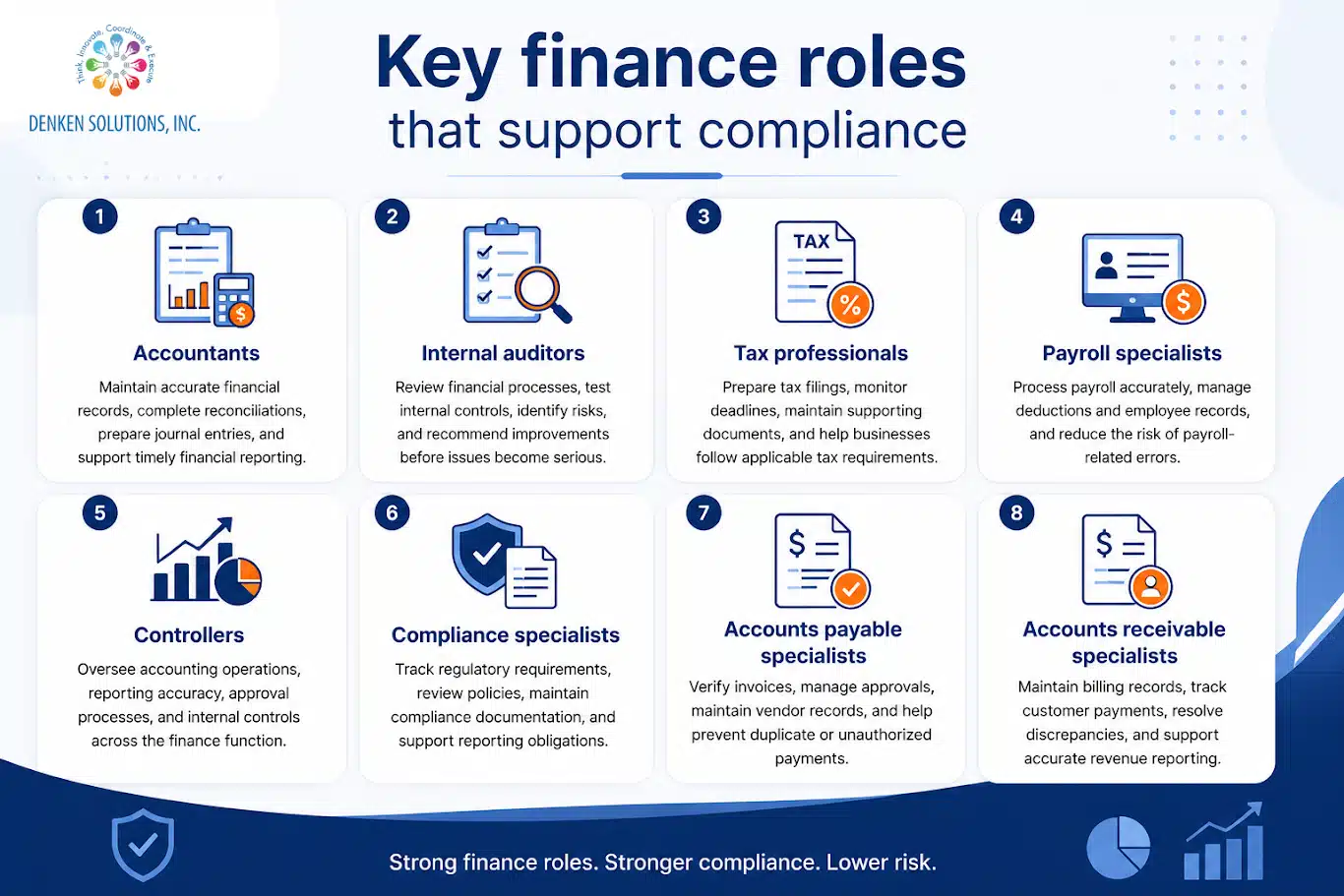
Contingent finance compliance staffing will allow your business to bring in qualified accounting, audit, tax, and compliance professionals for a certain period or project. These professionals tend to provide additional capacity and specialized expertise without needing your business to increase the permanent headcount.
1.Clear reconciliation backlogs
Contingent accountants help in reviewing payroll, intercompany, general ledger, bank, and balance sheet accounts to ensure there are no mismatches or unsupported entries. They will also investigate the causes of any discrepancies, incorrect transactions, and ensure account balances are properly supported before the financial statements are finalised.
2.Preparing audit-ready documentation
Contingent finance staffing collect invoices, approvals, contracts, and other required records. They also help in organizing them into reports and clear audits. This will also help in reducing any delays caused by missing documents and help your business to respond clearly to audit requests more quickly and accurately.
3.Review transactions before reporting
Experienced finance professionals will verify calculations, classification of accounts, and supporting documents before the reports are submitted. The extra review will help in catching errors, duplicate errors, unsupported adjustments, and incorrect accounting treatment before they start creating compliance-related issues.
4.Perform the control testing
Contingent audit and compliance specialists will review whether financial controls and approval processes are working efficiently. They also record any issues, identify the causes, and suggest practical ways of improvement.
5.Update processes and policies
Contingent staff can efficiently document approval limits, finance workflows, reporting duties, access rules, and control processes. This will help your employees follow a consistent process and give auditors clear evidence of the company’s compliance controls.
When should companies use flexible finance staffing?
Companies should use a contingent workforce when their workload changes, internal teams require temporary support, or specific financial expertise is needed for a brief term. This technique will enable your organization to engage qualified finance specialists without instantly expanding any permanent workforce. It can assist in maintaining productivity, meeting deadlines, and controlling workforce costs while also giving companies the flexibility to respond to changing business requirements.
1.During peak reporting periods
Finance teams generally face intense responsibilities throughout the month-end, quarter-end, year-end closing, audits, tax season, and planning cycles. Temporary professionals will support reporting, paperwork, and financial analysis so that deadlines are met without overburdening the permanent staff.
2.When employees are unavailable
Hiring contingent staff helps your business to maintain a flow during the holiday season, maternity leave, medical leave, resignations, or extended absences. Temporary finance professionals fill the important roles and keep payroll, accounting, reporting, and everyday financial operations running smoothly and efficiently.
3.For short-term projects
Companies might require extra support for system upgrades, audits, mergers, restructuring, or compliance projects. Project-based professionals will provide the required skills without adding to the permanent roles.
4.When specialised expertise is needed
Certain finance needs experience in areas like financial planning and analysis, payroll, taxation, risk management, internal controls, or regulatory compliance. Flexible staffing enables companies to access specialists only when the expertise is required.
5.During rapid business growth
Growing companies tend to experience a sudden spike in reporting requirements, transactions, invoices, payroll activity, and financial planning requirements. Flexible finance professionals will also help in handling the additional workload while the business plans its long-term staffing structure.
How Denken Solutions supports flexible finance staffing
Denken Solutions will help businesses access qualified finance and accounting professionals depending on the workload, project requirements, and long-term workforce plans. If a company requires temporary support during a busy reporting period or specialised expertise for a finance project, Denken Solutions will provide flexible accounting compliance staffing options without needing an immediate permanent headcount increase.
1.Finance talent sourcing
Denken Solutions helps in identifying talent who have experience in taxation, accounting, payroll, financial analysis, auditing, accounts payable, accounts receivable, and regulatory compliance.
2.Candidate screening
Recruiters will evaluate candidates depending on their technical knowledge, industry experience, communication skills, availability, and ability to work within the company’s financial processes.
3.Flexible staffing models
Businesses can easily hire finance talent using temporary, contract, project-based, or contingent talent, depending on the complexities and duration of the job requirement.
4.Access to specialised expertise
Companies can bring in professionals with specific knowledge of financial reporting, internal controls, compliance, payroll, taxation, or finance system implementation.
Conclusion
By giving your company fast access to competent candidates amid reporting deadlines, audits, regulatory changes, and temporary personnel gaps, flexible finance staffing will help you lower any compliance-related risks. These accounting compliance staff are capable of maintaining accurate documentation, bolstering internal controls, and ensuring the seamless operation of crucial financial procedures.
Without additional permanent employees, businesses can easily satisfy their compliance requirements, handle shifting workload requirements, and maintain operational continuity by selecting the appropriate type of employment and skilled recruitment partner.
FAQs:
1.What is flexible finance staffing?
Flexible finance staffing allows companies to hire accounting and finance professionals on a temporary, contract, project-based, fractional, or contract-to-hire basis. It helps businesses respond to changing workloads without immediately adding permanent employees.
2.When should a company use temporary finance professionals?
Companies may need temporary finance support during month-end or year-end closing, audits, tax preparation, system implementations, mergers and acquisitions, rapid growth, employee leave, or unexpected resignations.
3.How can contingent staff reduce finance compliance risk?
Contingent staff provide additional capacity and specialized expertise during audits, financial closing, tax season, and regulatory changes. They can support accurate records, timely reconciliations, reporting deadlines, and stronger internal controls.
4.Can Denken Solutions support short-term and project-based finance needs?
Yes. Denken Solutions can help companies engage contingent staff for audits, financial closing, tax season, system implementations, employee leave coverage, and other short-term projects.
5.How does Denken Solutions reduce the burden on internal teams?
Denken Solutions manages candidate sourcing, initial screening, and recruitment coordination. This allows internal finance and HR teams to focus on operations, compliance priorities, and project delivery.