Short-term construction projects will usually require employees with specialised engineering skills. However, hiring permanent employees for temporary needs can increase the costs and also create long-term workforce challenges. Over 80% of U.S. construction firms report difficulty finding skilled labor, including engineers and specialists. From project delays and skills shortages to fluctuating workloads, construction companies require flexible hiring solutions that provide access to qualified engineers without significantly expanding permanent headcount.
Hiring a contingent engineer will allow your business to scale teams depending on project requirements while also maintaining cost efficiency and operational flexibility. This approach can help construction firms access specialised skills, meet deadlines, and complete projects successfully without the burden of long-term employment commitments.
In this blog, we will explore how to hire engineers for short-term construction projects, the advantages of contingent hiring, and strategies to build an agile workforce without increasing the headcount.
Why do construction companies need engineers for short-term projects?
Construction projects usually need specialized skills for certain phases or a limited duration of time. Hiring an engineer on a short-term basis can help companies access the right expertise without having to commit to permanent workforce costs
Temporary engineers will help construction companies handle the project deadlines, complicated technical requirements, and scale the teams depending on the project needs. Whether it is a structural design, site planning, electrical systems, or project coordination, short-term engineering support will allow companies to complete projects efficiently while also remaining flexible.
Some of the common reasons construction companies need contingent talent for short-term engineering staffing include:
1.Project-based requirements:
Various construction projects will need specialised engineering knowledge. This might not be required after completing a project. Hiring a contingent engineer temporarily will allow your company to hire experts for certain tasks like design review, technical analysis, or construction planning.
2.Handling the varying project workloads:
Construction workloads can change depending on contracts, project timelines, and business-related demand. Contingent hiring will help your company increase the workforce during busy periods without having extra permanent employees during slow phases.
3.Meeting the project deadlines:
Any delay in engineering work can significantly impact the entire construction schedule. Temporary engineers will provide extra support to complete designs, resolve technical challenges, and keep projects moving as per the deadlines.
4.Accessing specialized skills without any commitment:
Certain construction projects will need engineers with some technical skills or industry experience, which can not be available within the existing team. Hiring a contingent engineer will enable companies to access specialized talent when needed without the long-term costs and commitments that are associated with permanent hiring.
Benefits of hiring project-based engineers
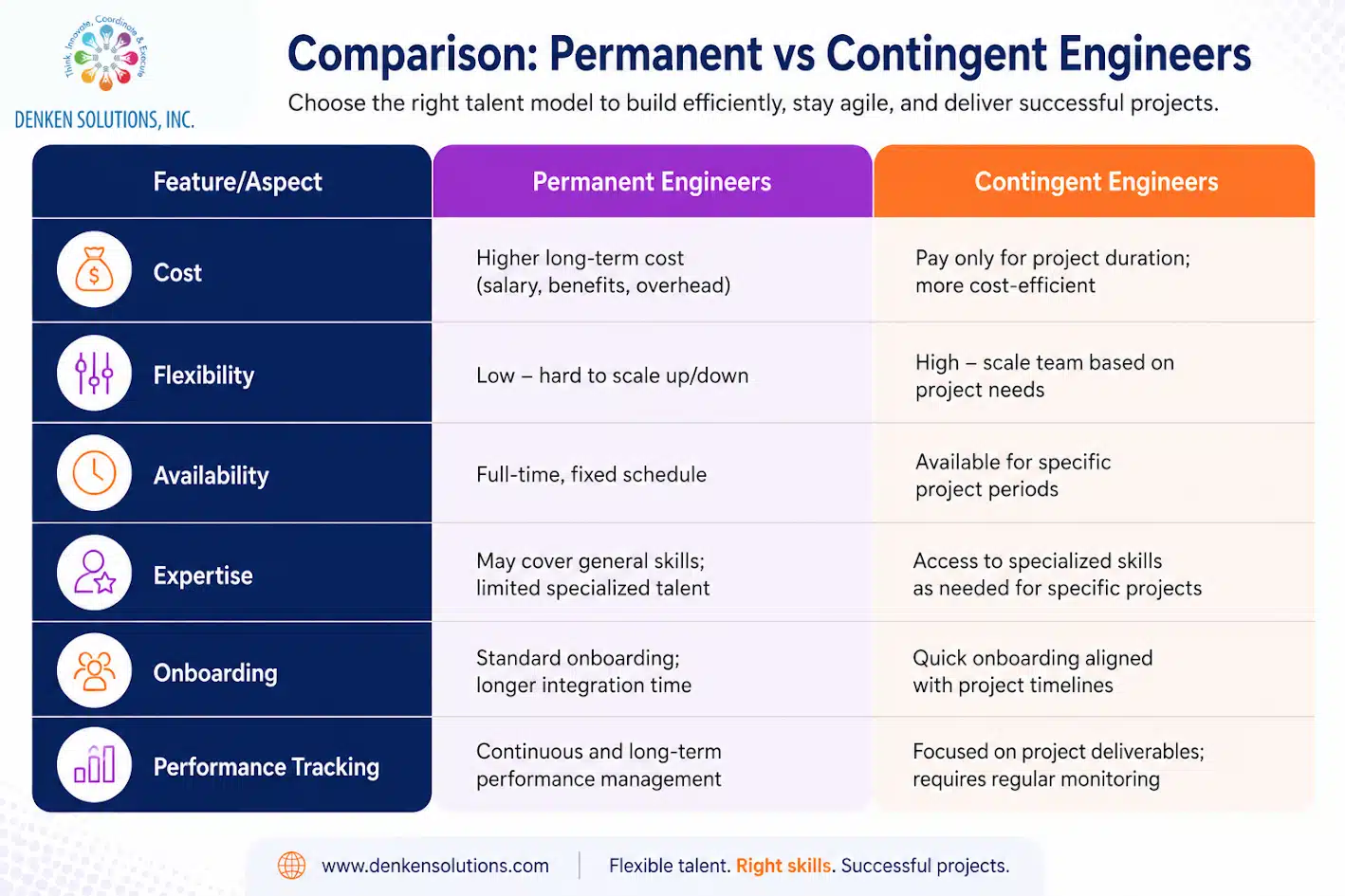
Hiring project-based engineers will enable construction companies to access specialised skills when they require them without increasing the permanent headcount. As per Deloitte’s construction industry outlook, 70% of construction leaders say flexible project teams help deliver on deadlines more consistently. This flexible approach will help your business to handle project demands, control costs, and complete construction work efficiently.
1.Reduce the costs of the long-term workforce:
Project-based hiring will help companies avoid the expenses associated with permanent employees. This can include salaries, benefits, and other employment costs. Businesses will pay only for engineering support for the duration of the project.
2.Access to specialized engineering expertise:
Construction projects usually need engineers with specific technical skills and experience. Hiring a project-based engineer will allow your business to bring in professionals with the correct skills for tasks like designing, planning, analyzing, and executing projects.
3.Scale teams depending on the need:
Construction workloads can change throughout varying phases of the project. Project-based engineering hiring will enable companies to quickly increase or reduce their workforce depending on current needs without managing excess staffing.
4.Improve the project timelines:
Additional engineering support will help teams to handle complicated tasks, resolve any technical challenges, and complete deliverables quickly. This will reduce delays and help construction companies meet any project deadlines.
5.Access to a wide pool of talent:
Hiring a project-based engineer, including a remote professional, will allow construction companies to access skilled talent beyond the local market. This will help in overcoming skill shortages and finding qualified engineers quickly.
How to hire contingent engineers for short-term construction projects
Hiring contingent engineers will allow your business to access skilled talent for certain projects without increasing the permanent headcount. A structured hiring process will help businesses in project-based engineering hiring. This ensures smoother onboarding and the successful completion of projects.
Step 1:Define the requirements of your project
Begin by identifying the engineering support that your project requires. Determine the required engineering specialization, technical skills, duration of project, software expertise, and expected deliverables. Clear requirements will help in finding the right engineer quickly and avoid hiring mismatches.
Step 2: Pick the right hiring model
Pick an appropriate hiring approach that will fit the timelines and goals of your project. Companies can hire contingent engineers using contingent staffing. This will again depend on factors like the duration of the project, location, compliance requirements, and workforce flexibility.
Step 3: Evaluate the engineering experience and skills
You should review your candidates depending on their technical experience, certifications, construction experience, and familiarity with software and tools. You should look for engineers who have previously worked on similar projects and understand the industry standards, project workflow, and safety requirements.
Step 4: Complete the onboarding
Once you have shortlisted a talent, you should enable their access to the required tools, communication channels, and project-related documentation. Clearly defining the project goals, timelines, responsibilities, and reporting processes helps the engineer integrate smoothly with the team.
Step 5: Monitor project progress and performance
Tracking performance and communicating regularly are important for delivering projects successfully. You should establish milestones, review any progress, and provide feedback to ensure that the talent’s work aligns with project deadlines and expectations.
What are the challenges of hiring a contingent construction worker?
Although hiring a contingent construction worker will provide flexibility, your company can face challenges in finding reliable talent, ensuring the quality of the talent, and managing performance throughout the duration of the project.
1.Difficult to verify the candidate’s experience and background
Construction companies can find it challenging to completely verify a contingent worker’s past experience, project history, certifications, and technical skills. Without a proper background check, businesses can end up hiring workers who might not have the required experience for the project.
2.Balancing quality and cost
While contingent hiring can significantly reduce workforce costs, picking workers depending on lower costs can severely impact the quality of the project and timelines. Companies have to find the right balance between cost efficiency and hiring skilled professionals who can deliver reliable results.
3.Limited visibility into performance
Managing the performance of temporary workers can get challenging, especially when they work remotely or are assigned to a short-term project. Companies require proper tracking methods, regular communication, and clear performance expectations to ensure work meets project standards.
How Denken Solutions helps to overcome these challenges
Hiring a contingent construction worker can help your company to improve flexibility. However, challenges like verifying talent quality, managing costs, and tracking performance efficiently can make the process difficult. Denken Solutions assists businesses in overcoming these challenges by enabling access to qualified professionals, streamlining workforce management, and providing ongoing support throughout the engagement.
1.Verifies the background of the talent
Denken Solutions will help companies reduce any hiring risks by efficiently screening contingent workers before placement. We evaluate candidates depending on their experience, technical skills, certifications, and project background to ensure they have the expertise required for construction projects.
2.Balance the cost and quality effectively
Denken Solutions will help businesses access skilled contingent talent while also maintaining cost efficiency. Our flexible staffing solutions will allow companies to hire qualified professionals depending on project requirements without any long-term costs associated with permanent employees.
3.Workforce support and performance tracking
Denken Solutions provides ongoing support to assist companies in managing contingent workers efficiently. We help in establishing clear expectations, maintaining communication, and monitoring project progress to ensure workers meet quality standards and deliver successful project outcomes.
Conclusion
Employing engineers for temporary building projects gives businesses access to specialized talent without adding more permanent employees. Construction companies can grow their teams according to project requirements while keeping costs under control by utilizing flexible employment methods like contract staffing, contingent workers, or global talent solutions.
Denken Solutions assists companies in managing labor requirements, locating skilled engineers, and creating adaptable teams that facilitate project completion. Businesses may finish projects quickly while retaining the flexibility required for future expansion with the correct talent strategy.
Frequently Asked Questions
Why should construction companies hire engineers on a short-term basis?
Short-term engineers provide specialized skills for specific project phases, help meet deadlines, and allow companies to scale teams without adding permanent staff.
What types of engineers can be hired for short-term projects?
Companies can hire civil, structural, mechanical, electrical, and BIM/CAD engineers depending on project requirements.
What are the benefits of hiring project-based engineers?
Benefits include cost savings, access to specialized expertise, team scalability, faster project completion, and access to a wider talent pool.
How does Denken Solutions help overcome these challenges?
Denken Solutions screens candidates, balances cost and quality, and provides ongoing performance tracking and workforce support to ensure successful project outcomes.