Talent acquisition is one of the primary components of human resource management. This has witnessed massive breakthroughs because of advancements in technology. This is especially true for artificial intelligence. Automation and artificial intelligence are two aspects that are having a significant technological revolution in every workplace. According to SHRM’s 2025 research, AI adoption in HR has increased by double in a single year. Earlier it was 26%, and it increased to 43%. This makes recruitment the number one function using AI. These developments are way more than just facts. They are becoming primary factors for businesses that are trying to improve their decision-making, maximize their personnel planning, and maintain a competitive advantage in the market. HR tech for the process of staffing tends to play an important role in streamlining recruitment, enhancing the talent pool, and also ensuring that businesses will stay ahead of the curve. In this blog, we have highlighted how AI and automation are transforming the contingent workforce acquisition process.
What is talent acquisition technology?
In simple words, the technologies and software that are used during the recruitment process are called talent acquisition technology. These technologies are used to help recruiters with phases of hiring. This includes talent applications, conducting interviews, hiring, and onboarding. Businesses should comprehend and ensure they are using these technologies. This will help them achieve success in this growing competition and complicated employment settings. Various factors of the hiring process tend to depend on this technology, especially with the rise of automated hiring solutions. These tools will help in streamlining recruitment, enhance the candidate selection process, and also ensure that businesses stay efficient in a fast-moving market.
How AI is changing candidate sourcing
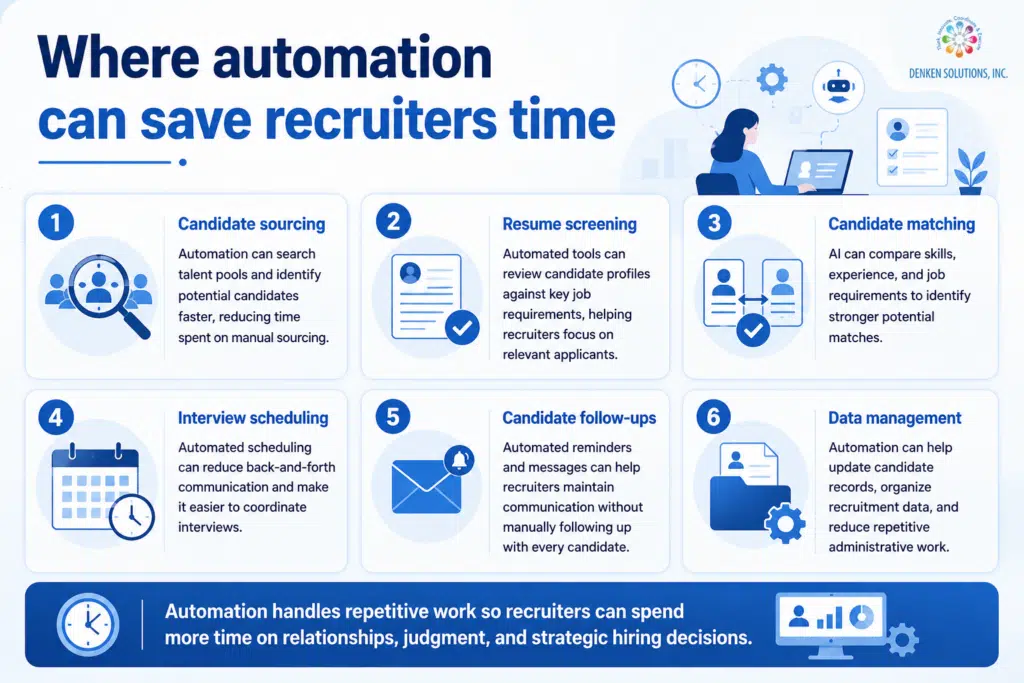
Finding qualified talent can be extremely challenging. This is especially true when recruiters are working with large pools of talent, looking for multiple job requirements, and have tight hiring timelines. AI is helping to change this process by making it easy to identify candidates, analyze large amounts of candidate data, and also focus recruitment efforts on professionals who are closely aligned with certain requirements.
1.Finding candidates quickly
AI-powered sourcing tools can help in searching and analyzing talent pools quickly. This is a quicker process than when using manual processes. This will help recruiters identify any potential candidates quickly and spend increased time engaging with the relevant talent.
2. Improve candidate matching process
AI can compare job requirements with experience, candidate skills, and professional backgrounds to identify any potential matches. This will also help recruiters move way beyond the basic keyword searches and find candidates with more relevant qualifications.
3. Helps in identifying passive candidates
Not every qualified professional is actively applying for jobs. AI can help recruiters to identify professionals whose skills and experience match an opportunity. This is even when they are not actively searching for a new role.
4. Reducing any repetitive sourcing work
Recruiters usually spend a lot of time looking for profiles, reviewing information, and also building candidate lists. Automation can handle parts of these repetitive tasks. This allows recruiters to focus increasingly on candidate engagement and relationship building.
5. Encourages data-driven sourcing
AI can help recruitment teams to analyze candidate and hiring data to identify patterns in sourcing, availability of talent, and any potential gaps. These insights can help recruiters to refine their sourcing strategies and make more informed decisions.
What AI cannot replace in contingent recruitment?
Automation and AI can make contingent recruitment faster by supporting screening, sourcing, matching, and administrative tasks. However, recruitment is not just about processing data or finding relevant profiles. Building the right workforce also needs human understanding, communication, judgement, and relationships. These are the areas where recruiters continue to play a crucial role.
1. Human judgement
AI can quickly identify candidates depending on skills and keywords. However, recruiters tend to bring professional judgement and context to estimate if a candidate is genuinely suitable for the role, team, and client.
2. Building a relationship
Contingent recruitment depends massively on strong relationships. Building trust with candidates and clients will need human interaction, consistent communication, and also actively listening.
3. Understanding the requirements of the client
Job descriptions do not always capture the complete essence of a hiring requirement. Recruiters can ask the right questions, understand business priorities, and also identify the qualities a client really requires.
4. Negotiation
Salary expectations, start dates, availability, contract terms, and candidate-related concerns usually require discussion and negotiation. Human recruiters can balance multiple expectations and find workable solutions.
5. Handling unexpected situations
Hiring does not always go as planned. Candidates can withdraw, requirements can change, or hiring timelines can shift significantly. Recruiters can adapt quickly and find practical solutions.
A comprehensive guide to AI integration
AI is slowly transforming how a business works. It can range from automating repetitive tasks to improving productivity and decision-making. However, successful AI integration needs a lot more than just adopting new tools. It will need clear goals, the right technology, and a practical implementation strategy. In this section, we will explore the important steps and considerations for integrating AI into business operations.
1. Analyse the existing workforce management system
Examine current contingent worker management processes carefully. Pay primary attention to areas such as:
- Project assignment
- Candidate sourcing
- On-boarding
- Time keeping
You should find areas and inefficiencies where AI tends to have a massive impact. This should include task automation, data accuracy, or workflow optimization. This process can be streamlined and made way more efficient by using a consulting firm to help determine if your company requires AI.
2. Pick the right AI tools
For customized solutions, you should pick the appropriate AI technologies that can have an important impact:
- AI-driven recruitment platforms: Use platforms such as Pymetrics. It can employ AI to quickly analyze resumes, conduct video interviews, and also measure behavioral patterns to anticipate performance and job fit.
- Automated onboarding tools: To free up HR personnel to focus on strategic projects, you should use tools like BambooHR to automate standard onboarding duties such as collecting data, verifying documents, and first training modules.
- Capabilities Assessment Tools: Incorporate Codility or HackerRank, two platforms that examine prospective freelancers’ or contractors’ technical and programming capabilities using AI-powered tests.
- Use performance management software: Performance management software, such as Visier, offers comprehensive insights on employee productivity and performance trends throughout your contingent workforce. This facilitates proactive management and aids in pinpointing areas in need of enhancement or more instruction.
3. Train the team
Provide the HR staff with a thorough training program that will cover both the technical aspects of using the AI software and data visualization tools. Also build strong analytical skills to interpret data outputs, spot trends, and derive insightful conclusions, which will help them in making the right workforce management decisions. This dual focus enables them to optimize your contingent labor management strategy by converting the generated data into strategic actions in addition to making effective use of the technology.
4. Use AI in phased implementation
Begin with the primary areas that are determined by the assessment and progressively include AI solutions. To experience the benefits and demonstrate the worth of AI in the company, you should start by automating hiring processes or onboarding responsibilities. Before applying AI to other domains like performance management or compliance tracking, analyze its efficacy and make any adjustments to your approach.
5. Keep an eye on and improve
Following integration, use particular measures to regularly track the effectiveness of AI systems, including:
- Reduced time to onboarding
- Levels of satisfaction among contingent workers
- Project completion rates within budget
6. Assure ethical standards and compliance
Making sure that your AI solutions abide by all applicable employment laws and data protection standards, including the CCPA and GDPR, is crucial. Conduct audits to avoid biases or ethical problems in automated procedures, and update AI algorithms frequently to reflect changes in the law. In addition to providing legal protection for the business, upholding strong ethical standards in AI applications promotes just and equal treatment of all employees, full-time and contract.
Need flexible hiring support? Explore our contingent staffing services to find skilled talent faster and scale your workforce with confidence.
Conclusion
In conclusion, outsourcing HR services for talent acquisition is becoming more and more dependent on automation and technology. Outsourced HR firms that make investments in automation and technology are better able to provide their clients with hiring procedures that are more precise, data-driven, and efficient. Better hiring practices and a more prosperous company may follow from this.